
Zambia records 8% jump in copper output in 2025
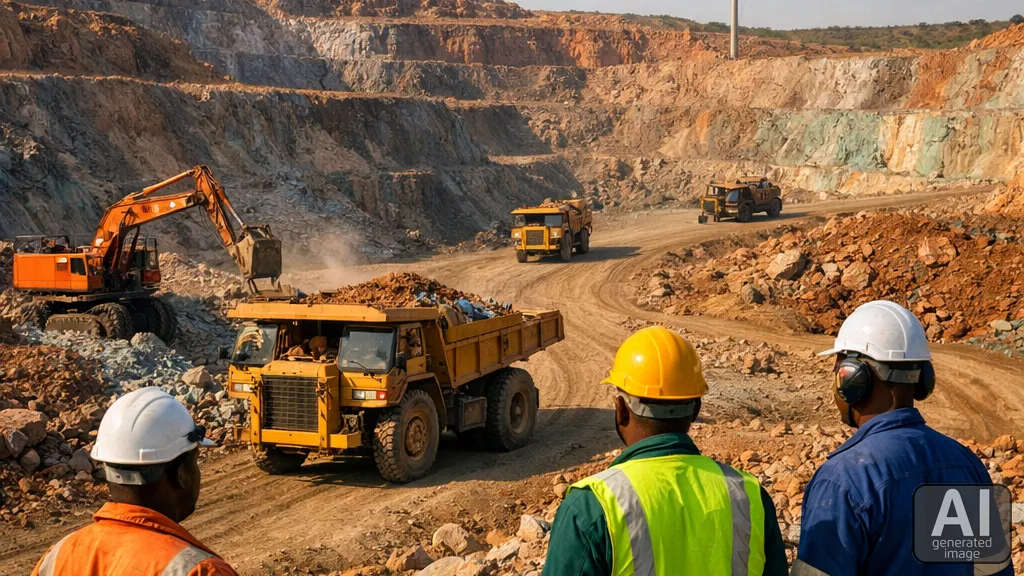
Zambia’s copper output rose 8 percent in 2025 to 890,346 tons, driven by stronger mine performance despite operational disruptions.
Zambia recorded a strong rebound in copper production in 2025, posting an 8 percent year-on-year increase that further consolidated its position as Africa’s second largest copper producer. According to the Ministry of Mines, total copper output reached 890,346 metric tons, up from 825,513 tons the previous year. While this performance demonstrated renewed momentum across several major mining operations, national production still fell short of the government’s ambitious one million ton target.
The production growth was largely driven by improved performance at some of the country’s most strategic assets. Vedanta’s subsidiary, Konkola Copper Mines, recorded a four-fold increase in output to 80,215 tons, reflecting ongoing rehabilitation and operational recovery efforts. Meanwhile, Mopani Copper Mines lifted production by about 40 percent following its 2023 acquisition, benefiting from capital injections, improved mine planning, and enhanced operational stability. Additional gains were reported at Kansanshi Mine and Lubambe Mine, both of which contributed to the overall national increase.
Despite these positive developments, several operational setbacks prevented Zambia from reaching its production target. A tailings dam collapse at Sino-Metals Leach forced a temporary shutdown, disrupting output during the year. At the same time, the Trident Mine experienced an 18 percent decline in production due to lower ore grades, highlighting ongoing geological and technical challenges faced by mature mining assets. These disruptions underscore the vulnerability of large-scale mining operations to infrastructure failures and natural resource variability.
Looking ahead, Zambia has set a long-term goal to raise copper production to three million tons by 2031. This strategy is closely tied to rising global demand for copper, particularly from electric vehicle manufacturing and renewable energy infrastructure, where copper plays a critical role in wiring, batteries, and power transmission systems. Achieving this target will require sustained investment, improved mine safety standards, and stable policy frameworks to attract international capital.
From a broader perspective, Zambia’s production gains signal renewed confidence in the country’s mining sector and reinforce copper’s central role in the national economy. If expansion plans are successfully implemented, increased output could boost export revenues, strengthen fiscal stability, and create downstream opportunities in processing and manufacturing. For Africa’s mining industry, Zambia’s trajectory may serve as a benchmark for how resource-rich economies can position themselves to benefit from the global energy transition, provided that operational risks and infrastructure constraints are effectively managed.
Mini-Glossary
- Metric tons: A standard unit of weight equal to 1,000 kilograms, commonly used in global commodity markets.
- Tailings dam: An engineered structure used to store waste materials left after extracting minerals from ore.
- Ore grades: The concentration of valuable minerals within mined rock, which affects production efficiency and profitability.
- Downstream: Activities that occur after raw material extraction, such as processing, refining, or manufacturing.
Editor: Vural Burç ÇAKIR