
Tharisa Boosts PGM Production as Zimbabwe's Karo Platinum Project Advances
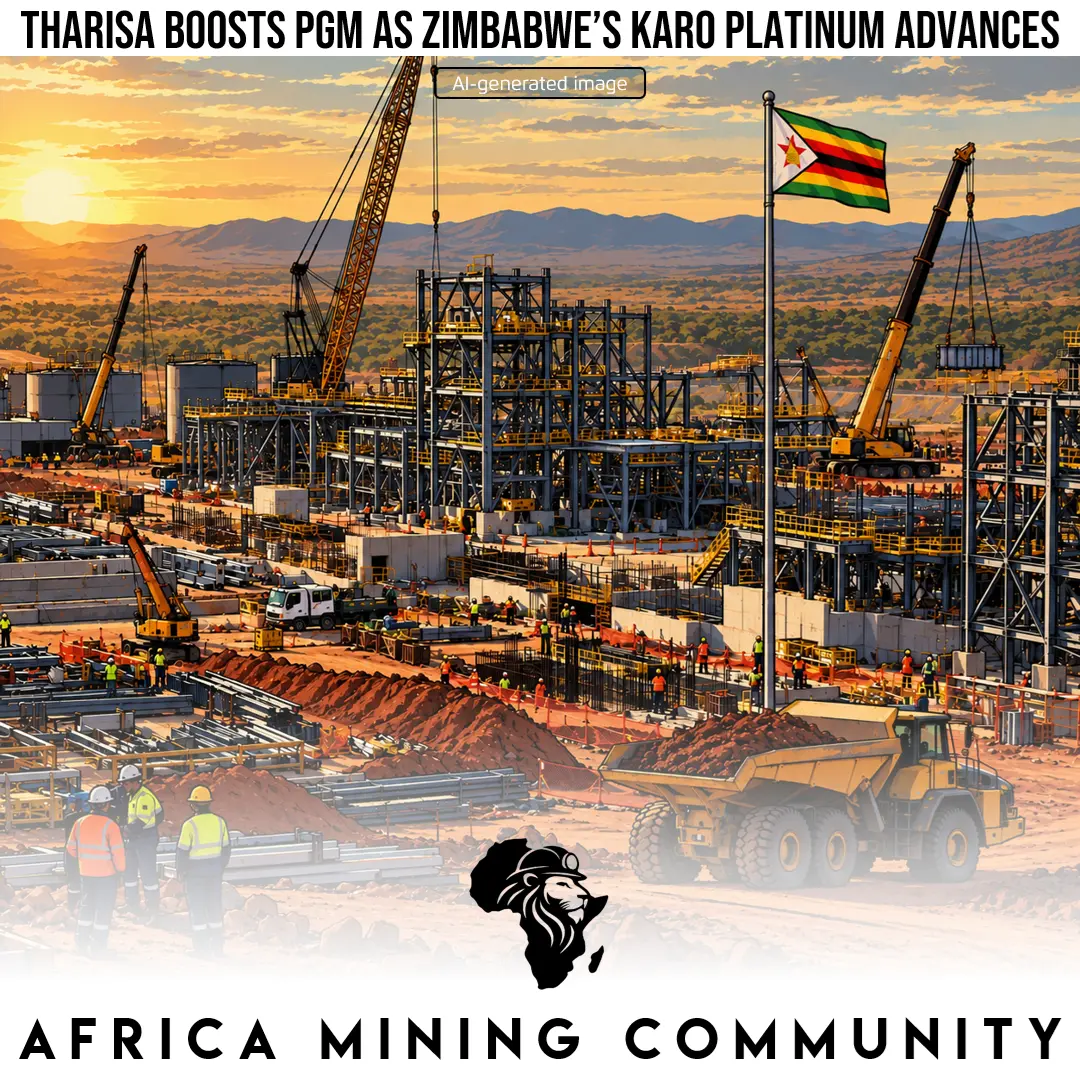
Tharisa boosts PGM output by 11% in FY2026 and secures US$300m financing to advance Zimbabwe's Karo Platinum project towards 2027 production.
Tharisa has reported stronger operational performance for the 2026 financial year (FY2026), achieving its annual production targets while making significant progress on its strategic mining investments in Southern Africa. The mining group recorded an increase in platinum group metals (PGM) and chrome concentrate production, supported by improved commodity prices and continued operational development. Meanwhile, the company is advancing its Karo Platinum project in Zimbabwe through substantial financing arrangements, long-term mining agreements and construction activities. These developments form part of Tharisa’s broader strategy to expand its PGM production capacity, strengthen operational sustainability and transition towards underground mining.
During FY2026, Tharisa’s annual PGM production increased by 11% to 153,700 ounces, meeting the company’s production guidance. The improved output reflects stronger production performance across its mining operations, while growth in chrome concentrate production further supports the company’s diversified mineral portfolio. Favourable commodity prices have also contributed to a more supportive operating environment, potentially strengthening revenue generation and the company’s capacity to finance its long-term expansion programme.
A major development has been the successful arrangement of a US$300 million senior secured Nordic bond to support the remaining construction programme at the Karo Platinum project in Zimbabwe. The bond proceeds are currently held in escrow, providing a designated financing mechanism for the project, subject to the applicable release conditions. Approximately US$240 million has already been invested in Karo Platinum, against estimated total capital expenditure of US$516 million. The new financing represents an important milestone in securing the capital needed to advance construction and move the project closer to commercial production.
Karo Platinum has also strengthened its regulatory and commercial foundations through two major agreements. The company signed a 25-year Special Mining Lease Agreement with the Zimbabwean government, establishing a long-term framework for developing and operating the platinum resource. Additionally, a five-year PGM concentrate offtake agreement with Valterra Platinum provides an important commercial arrangement for the sale of future mineral production. Together, these agreements improve the project's long-term planning framework and establish a route to market for its expected output.
Construction activities at Karo Platinum are progressing towards the fabrication and installation of structural steel components, marking another stage in the development of the project's processing infrastructure. First ore processing is targeted for the fourth quarter of 2027, with steady-state annual production expected to reach between 220,000 and 230,000 ounces of six-element platinum group metals (6E PGMs) approximately six months later. Achieving these production levels would establish Karo Platinum as a significant additional source of PGM supply in Southern Africa, although the timetable remains dependent on successful construction, commissioning and operational ramp-up.
Alongside its Zimbabwean expansion, Tharisa is continuing its planned transition towards underground mining. During the fourth quarter of FY2026, the company completed approximately 450 metres of underground development, demonstrating progress in establishing the infrastructure required for future mining operations. The Apollo shaft is expected to achieve steady-state operations by early FY2029. This transition is an important component of Tharisa's long-term mine development strategy, aimed at accessing underground mineral resources and supporting sustained production as its mining operations evolve.
From a regional economic perspective, Tharisa's production growth and investment in Karo Platinum could reinforce Southern Africa's position in the global platinum group metals industry. In Zimbabwe, successful commissioning of the Karo project could expand mineral export earnings, attract further investment, create employment opportunities and increase demand for local engineering, construction and mining services. For South Africa, Tharisa's transition towards underground mining could help sustain production capacity and support the longer-term utilisation of its mineral resources. However, the scale of these benefits will depend on construction execution, infrastructure reliability, commodity market conditions and the ability to achieve planned production targets. Collectively, these developments highlight the continued importance of capital investment, operational modernisation and regional mineral development in strengthening Africa's mining sector.
Mini-Glossary
- Platinum Group Metals (PGMs): A group of valuable metals, including platinum and palladium, used in automotive catalytic converters, industrial applications and other technologies.
- 6E PGMs: Six platinum group elements commonly reported together in mining production, platinum, palladium, rhodium, ruthenium, iridium and osmium.
- Chrome Concentrate: A processed mineral product containing a higher concentration of chromium-bearing minerals, mainly used in ferrochrome and stainless-steel production.
- Senior Secured Nordic Bond: A debt financing instrument issued within the Nordic bond market, backed by specified security and generally having priority over subordinated debt.
- Escrow: An arrangement in which funds are held by an independent party until agreed conditions are fulfilled.
- Capital Expenditure (CAPEX): Money invested in developing, constructing or upgrading long-term assets such as mines and processing facilities.
- Offtake Agreement: A commercial contract under which a buyer agrees to purchase a defined quantity or share of a producer's future output.
- Special Mining Lease: A legal agreement granting mining rights under specified conditions for a defined period.
- Steady-State Production: The stage at which a mining operation reaches its planned, sustainable operating production level.
- Underground Development: The construction of shafts, tunnels and other infrastructure needed to access and extract minerals beneath the surface.