
South Africa backs rare earths push with $20 million state investment
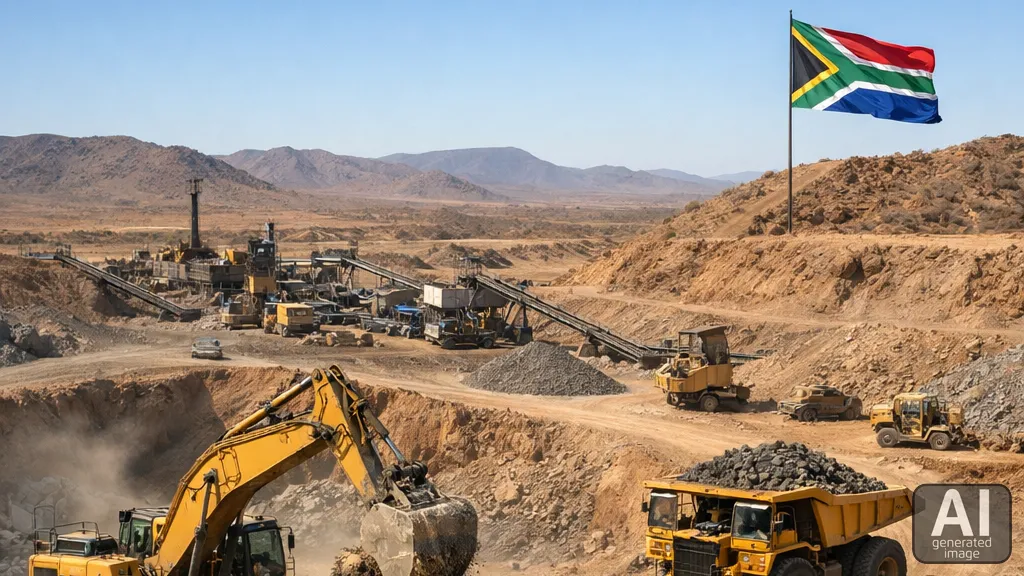
South Africa backs rare earth supply diversification with a $20 million state investment in Frontier Rare Earths’ EU-backed Zandkopsdrift project.
South Africa is taking a more assertive position in the global critical minerals landscape by backing the development of rare earth resources that are increasingly vital to modern technologies and energy transition efforts. Through a strategic state investment, the country is signaling its intention to become a reliable supplier of key inputs required for clean energy systems, advanced manufacturing, and defense applications, while also supporting international partners seeking to diversify supply chains away from China.
At the center of this initiative is a $20 million investment by South Africa’s state-owned Industrial Development Corp. into the Zandkopsdrift rare earths project in the Northern Cape. The project is owned by Frontier Rare Earths, a Luxembourg-registered mining company focused on developing non-Chinese rare earth supply. Zandkopsdrift gained additional international importance after being designated a strategic project by the European Union last year, reflecting Europe’s urgent push to secure alternative sources of critical minerals essential for electric vehicles, wind turbines, and high-tech manufacturing.
The funding from the IDC will primarily support the completion of a definitive feasibility study, a crucial step in determining the project’s technical, economic, and environmental viability. Frontier Rare Earths plans for Zandkopsdrift to begin production around 2030, with output including separated rare earth products alongside battery grade manganese as a valuable byproduct. Revenues from manganese production are expected to significantly reduce overall operating costs, strengthening the project’s ambition to become the lowest-cost rare earth producer outside China, which currently dominates global rare earth processing capacity.
To further enhance its technical competitiveness, Frontier has signed an agreement with Carester SAS, a specialist in rare earth extraction and separation technologies. Under this arrangement, processing would take place in France, aligning the project closely with European industrial policy objectives. In parallel, Frontier is assessing several European funding mechanisms that could complement South Africa’s state backing, underscoring the strong geopolitical and economic interest surrounding the project.
From a broader perspective, this investment aligns closely with the IDC’s mandate to support Southern Africa’s industrialization and critical minerals strategy. By anchoring a globally strategic rare earths project within South Africa, the country stands to benefit from technology transfer, skills development, and deeper integration into high-value global supply chains. Over time, successful development of Zandkopsdrift could enhance South Africa’s mining sector resilience, attract further foreign investment, and position the region as a key contributor to the global energy transition, with positive spillover effects for industrial growth and economic diversification across Africa.
Mini-Glossary
- Rare earths: A group of minerals essential for high-tech applications such as electric vehicles, wind turbines, and electronics.
- Definitive feasibility study: A detailed technical and financial assessment used to decide whether a mining project should proceed to development.
- Critical minerals: Minerals considered essential for economic and national security, often with limited or concentrated global supply.
- Battery grade manganese: High-purity manganese used in lithium-ion batteries to improve performance and stability.
- Extraction and separation technology: Processes used to isolate and purify rare earth elements from mined ore.
Editor: Vural Burç ÇAKIR