
Russia to Develop Geological Map and Mining Data System for Mali
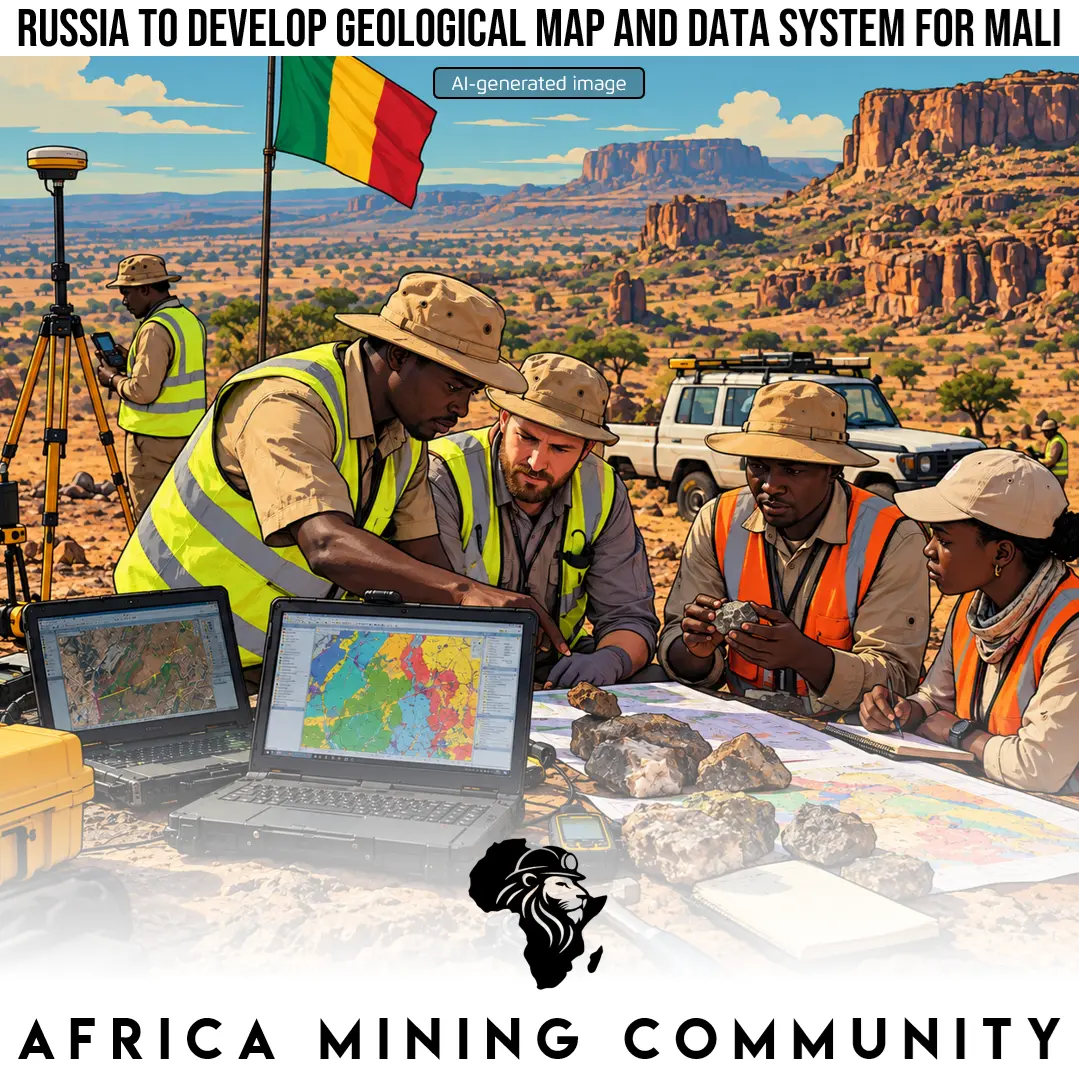
Russia's RusGeology to map over half of Mali and develop a digital mining data system, supporting mineral exploration, licensing and investment.
Russia is expanding its cooperation with Mali's mining sector through agreements to develop a comprehensive digital geological map and establish a modern mining information management system. The initiative, led by Russian state-owned geological exploration company Rosgeologiya (RusGeology), aims to strengthen Mali's mineral exploration capabilities, improve access to geological information, and create a more transparent environment for mining investment. The projects could support Mali's efforts to diversify its mineral production beyond gold while strengthening economic cooperation between the two countries.
The agreements were signed between Zarubezhgeologia, the international subsidiary of RusGeology, and Mali's Ministry of Mines during the Russia-Africa forum in Moscow. Under the arrangements, Russian geological specialists will undertake medium-scale geological mapping across two designated areas covering more than half of Mali's national territory. The mapping programme is expected to provide a more detailed understanding of the country's geological formations, mineral-bearing structures, and areas with potential for future exploration. By improving the availability and quality of geological data, the initiative could help identify previously underexplored mineral deposits and support more targeted exploration activities.
A central component of the cooperation involves establishing a digital mining information management system designed to modernise how Mali collects, organises, and administers geological and mineral resource data. The proposed platform will support geological database management, mineral licensing procedures, and regulatory oversight of mining operations. Such systems can improve administrative efficiency by consolidating geological records, exploration permits, and other mining-related information into a structured digital environment. This could also help government authorities monitor mineral exploration activities, manage mining rights, and provide investors with more reliable information when evaluating potential projects.
According to Alexey Desyatkin, Head of Zarubezhgeologia, the initiative is intended to make Mali's mineral resource information more accessible and transparent to potential investors. Access to reliable geological information is an important consideration for exploration companies, particularly during the early stages of mineral project development when geological uncertainty and financial risks remain relatively high. Improved geological mapping can help companies identify prospective exploration targets, prioritise investment decisions, and reduce some of the costs associated with preliminary mineral assessments. However, the commercial viability of any newly identified deposits would still require detailed exploration, resource estimation, and technical evaluation.
The agreements come as Mali seeks to expand and diversify its mining industry. Already recognised as one of Africa's major gold-producing countries, Mali is increasingly focusing on developing other mineral resources, particularly lithium, which is an important raw material used in rechargeable batteries, electric vehicles, and energy storage technologies. Improved geological knowledge could support exploration for additional commercially valuable minerals and provide a stronger technical foundation for future mining investment. Nevertheless, translating geological potential into operational mines will depend on factors including infrastructure availability, project financing, regulatory conditions, and international commodity demand.
The initiative also reflects the broader expansion of economic relations between Russia and Mali. Since Mali's military coup in 2020, the two countries have developed closer cooperation across several strategic sectors, including security, energy, mining, and natural resources. Russia's involvement in geological mapping and mining data management represents an additional dimension of this relationship, extending cooperation into the technical infrastructure that supports mineral resource development. Neighbouring Burkina Faso and Niger have also strengthened their relationships with Russia, illustrating a wider realignment of international partnerships across parts of the Sahel region, where governments are pursuing alternative arrangements for security assistance, investment, and economic development.
From a broader economic perspective, the successful implementation of Mali's geological mapping and mining information projects could strengthen the country's ability to attract mineral exploration investment, improve resource governance, and support long-term diversification of its mining industry. More comprehensive geological information may also help policymakers develop evidence-based mineral strategies and identify opportunities for domestic value addition. For Africa's mining industry, the agreements highlight the growing importance of geological data infrastructure and international technical partnerships in unlocking mineral potential. However, their ultimate economic impact will depend on the accuracy and accessibility of the resulting geological information, effective implementation of the digital management system, investor confidence, and Mali's ability to convert prospective mineral resources into commercially viable and responsibly managed mining operations.
Mini-Glossary
- Geological Mapping: The process of identifying and documenting rock formations, geological structures, and mineral characteristics across a particular area.
- Medium-Scale Geological Map: A map that provides regional geological information at a level of detail useful for identifying promising exploration areas.
- Mining Information Management System: A digital platform used to organise geological data, mining permits, mineral rights, and regulatory information.
- Mineral Exploration: The scientific and technical process of searching for economically valuable mineral deposits.
- Mineral Licensing: The administrative process through which governments grant companies legal rights to explore for or extract minerals.
- Resource Governance: The policies, institutions, and procedures used to manage a country's natural resources.
- Mineral Diversification: Expanding a mining industry's production beyond its traditional commodities into additional minerals.
- Domestic Value Addition: Processing or refining raw minerals within the producing country to increase their economic value.
- Commercial Viability: The ability of a mineral project to operate profitably under prevailing technical, financial, and market conditions.
- Geological Data Infrastructure: The databases, mapping systems, technologies, and institutions used to collect, store, and distribute geological information.