
Perseus Mining Secures Backup Power for Nyanzaga Gold Project in Tanzania
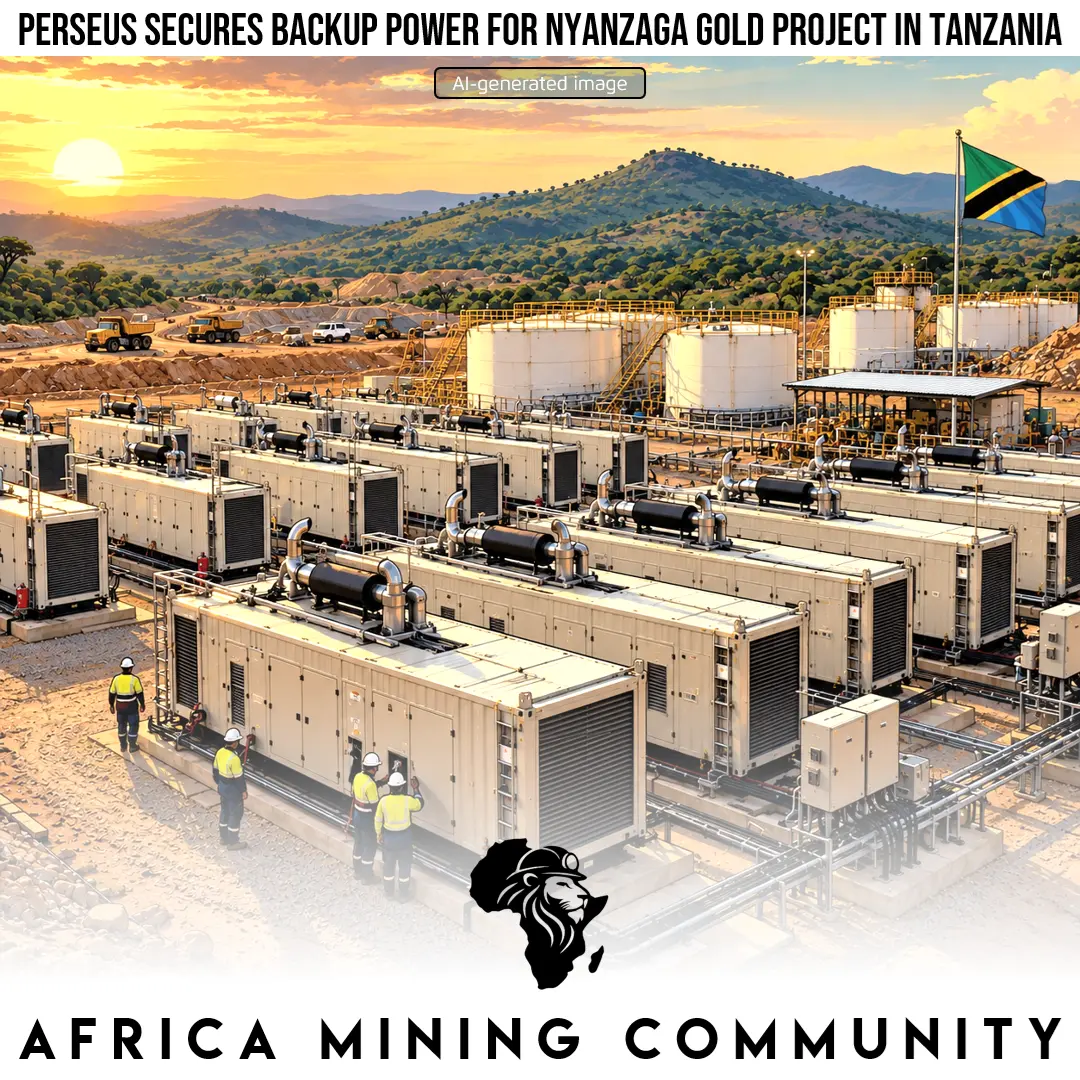
Perseus Mining secures 28 MW of backup power for Tanzania's Nyanzaga Gold Project ahead of its planned first gold production in January 2027.
Perseus Mining has strengthened the operational readiness of its Nyanzaga Gold Project in northwestern Tanzania by securing a comprehensive emergency power generation system ahead of the mine’s scheduled commencement of gold production in January 2027. The Australian-listed gold producer has acquired 28 containerized generator sets from South African power engineering specialist USP&E, providing a critical backup electricity solution for a mining operation located in an area where access to dependable grid infrastructure presents significant challenges. The investment represents an important step in preparing Nyanzaga for commercial operations, particularly given the substantial electricity requirements associated with modern gold extraction, mineral processing, and supporting mine infrastructure.
Under the supply arrangement, USP&E will deliver 28 Cummins KTA50G3 generator sets, each rated at 1 megawatt (MW), providing a combined nominal installed generation capacity of 28 MW. The generators will serve as an emergency electricity supply, helping maintain essential mining and processing activities during interruptions to the primary power source. Reliable electricity is particularly important for large-scale gold operations, where unexpected power disruptions can interrupt ore processing, affect equipment availability, and increase operational costs. By incorporating a dedicated backup generation system, Perseus Mining aims to improve the resilience of Nyanzaga's electrical infrastructure and reduce its exposure to potential power supply interruptions.
Australian electrical and automation engineering consultancy ECC is overseeing the engineering, procurement, and construction (EPC) activities associated with the power installation. The emergency generation infrastructure will include six bulk fuel storage tanks, each with a capacity of 72,000 litres, providing a combined storage capacity of 432,000 litres. The installation will also incorporate three fuel pump skids and 28 individual day tanks to support fuel distribution to the generator sets. These components are designed to facilitate reliable fuel storage, transfer, and delivery, enabling the generators to operate during extended periods when emergency electricity is required. The containerized configuration offers additional practical advantages, including simplified transportation, reduced on-site assembly requirements, and potentially faster installation and commissioning compared with more conventional power generation arrangements.
The selection of a containerized generation system reflects the importance of adaptable and robust energy infrastructure in remote mining environments. Containerized generators are generally easier to transport, install, and maintain, making them particularly suitable for mining projects operating in regions with logistical and infrastructure constraints. Their modular configuration also allows individual generating units to be maintained or serviced while other available units continue operating, depending on the system's electrical design. Combined with substantial on-site fuel storage infrastructure, this arrangement is intended to provide Nyanzaga with greater operational flexibility and a dependable emergency electricity source during critical stages of mine development and subsequent production.
Matthew Fredericks, Managing Director of USP&E, identified the Nyanzaga project as an example of the company's experience in delivering power generation solutions to mining operations in frontier markets characterized by demanding operating conditions. Such environments frequently require specialized engineering approaches because of limitations in regional electricity networks, transportation infrastructure, and access to technical support services. The company's involvement also highlights the contribution of South African engineering and power equipment suppliers to the development of mining infrastructure across the continent, particularly as international mining companies seek reliable energy solutions for increasingly remote mineral deposits.
The Nyanzaga Gold Project is expected to become a significant contributor to Perseus Mining's long-term production portfolio. With first gold production scheduled for January 2027, the operation is projected to produce more than 200,000 ounces of gold annually during its initial 14 years of operation. This production profile positions Nyanzaga as an important asset within the company's broader growth strategy and its efforts to expand and diversify gold production across Africa. By the end of the decade, the Tanzanian operation is forecast to account for approximately 28% of Perseus Mining's total gold output, illustrating its anticipated importance to the company's future operating performance, production capacity, and revenue generation.
The successful development of Nyanzaga could have broader implications for Tanzania's gold mining industry and the country's economic development. Once operational, the mine has the potential to support employment opportunities, procurement of local goods and services, government revenues, and demand for specialized mining infrastructure. The participation of South African and Australian engineering companies also demonstrates the international supply chain relationships involved in developing major African mineral projects. From an operational perspective, securing emergency generation capacity may reduce the risk of electricity-related production interruptions, although diesel-based backup power also introduces ongoing fuel procurement costs, logistical requirements, and environmental considerations. Ultimately, the project's contribution to Tanzania's mining sector will depend on successful commissioning, consistent production performance, infrastructure reliability, and effective cost management. If its production objectives are achieved, Nyanzaga could strengthen Tanzania's position as a major African gold producer while supporting Perseus Mining's longer-term expansion across the continent.
Mini-Glossary
- Containerized generator sets: Electricity-generating equipment housed within transportable enclosures for easier installation and maintenance.
- Megawatt (MW): A unit of electrical power equivalent to one million watts.
- Engineering, Procurement, and Construction (EPC): A project delivery arrangement covering technical design, equipment sourcing, and construction.
- Pump skid: A preassembled pumping system mounted on a structural frame for easier installation.
- Day tank: A smaller fuel tank that supplies a generator or other equipment during operation.
- Commissioning: The process of testing and preparing equipment or infrastructure for operational use.
- Operational resilience: The ability of a facility to continue functioning or recover quickly during disruptions.
- Frontier markets: Economies or investment environments that may have developing infrastructure and higher operational risks.
- Production portfolio: The collection of mining assets and operations contributing to a company's total mineral output.