
Midas Launches Comprehensive Drilling Campaign at Otavi Copper Project
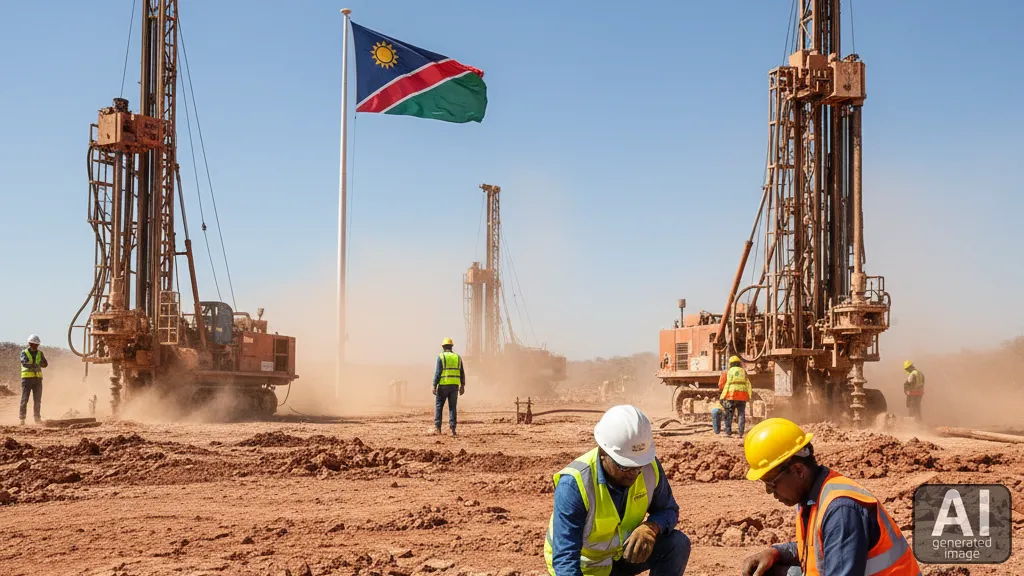
Midas launches full scale drilling at Namibia’s Otavi Copper Project, targeting major high grade systems and setting up 2026 as a pivotal discovery year.
Midas Minerals has entered a decisive phase in the development of its Namibian portfolio with the launch of a full scale drilling campaign across the Otavi Copper Project. This marks the company’s first major operational milestone since securing the 1,776 square kilometre project area, an acquisition expected to be finalised by late 2025. With multiple rigs now active across a series of high grade copper silver and copper gold silver prospects, Midas is advancing an aggressive strategy aimed at rapidly defining new mineral resources within one of Southern Africa’s most historically significant copper belts.
The drilling program has commenced with considerable momentum. Two diamond drill rigs are already operating at the T 13 high grade copper silver deposit, an area previously noted for standout intercepts including 7.24 percent copper and 144.4 grams per tonne silver over 17.2 metres. Complementing this work, a reverse circulation rig has been deployed to the Spaatzu prospect, formerly known as Monty, following extensive geochemical screening that helped prioritise bedrock targets for immediate testing. The campaign will expand progressively into other high potential zones including Deblin Segen, Devon and Hartebeespoort, where earlier drilling yielded additional strong grades such as 4.15 percent copper at Deblin and 3.11 percent copper at Hartebeespoort. Together, these early results suggest the presence of multiple robust mineralised systems across the project area.
Operational readiness has been reinforced by significant preparatory work. More than 2,000 samples have already been analysed using on site portable XRF technology, with laboratory assays pending to validate and refine these preliminary indications. Meanwhile, mapping and a detailed review of historic datasets have helped establish a cohesive geological framework, confirming widespread copper and gold anomalism over a district where less than 40 percent of the tenure has previously been drill tested. Importantly, Midas has structured the campaign to transition quickly from target generation to resource delineation, ensuring that high priority discoveries can be advanced with minimal delay. Although the wet season may temporarily influence access in certain areas, the company expects rigs to continue operating throughout, driven by the scale of opportunities identified to date.
The broader Otavi district is poised for an active exploration year, supported by both strong ground conditions and a robust financial position. Midas reported a healthy cash balance of US 15.3 million as of September 2025, enabling the accelerated pace of drilling. Nearby, the first phase South Otavi program, comprising 140 holes across 3,693 metres, was completed in October 2025, with assay results expected in January 2026. These results, together with ongoing drilling across the core Otavi targets, are likely to contribute to substantial news flow over the next 12 months, reinforcing 2026 as a potentially transformative year for defining copper, silver and gold resources across the region.
The advancement of the Otavi Copper Project carries significant implications for Namibia and the broader African mining industry. Successful delineation of new high grade resources would strengthen Namibia’s position as a competitive producer of critical minerals and attract additional exploration capital to the Otavi copper belt. Moreover, sustained investment in this historically productive region could stimulate local economic growth, enhance regional supply chains and further integrate Southern Africa into global markets for copper, silver and gold, all of which play essential roles in energy transition technologies and industrial development.
Mini Glossary
- Diamond drilling: A core drilling method that retrieves intact cylinders of rock for detailed geological analysis.
- Reverse circulation (RC) drilling: A drilling technique that produces rock chips rather than core, often used for rapid, cost effective exploration.
- Portable XRF: Handheld analytical equipment used to quickly determine the elemental composition of samples.
- Anomalism: Geological zones showing elevated concentrations of certain minerals, indicating potential mineralisation.
- Bedrock target: A drilling location chosen based on indications that mineralisation exists within the solid rock beneath surface sediments.
Editor: Vural Burç ÇAKIR