
Makor's Muli Copper Project Emerges as a District-Scale Growth Opportunity in Zambia
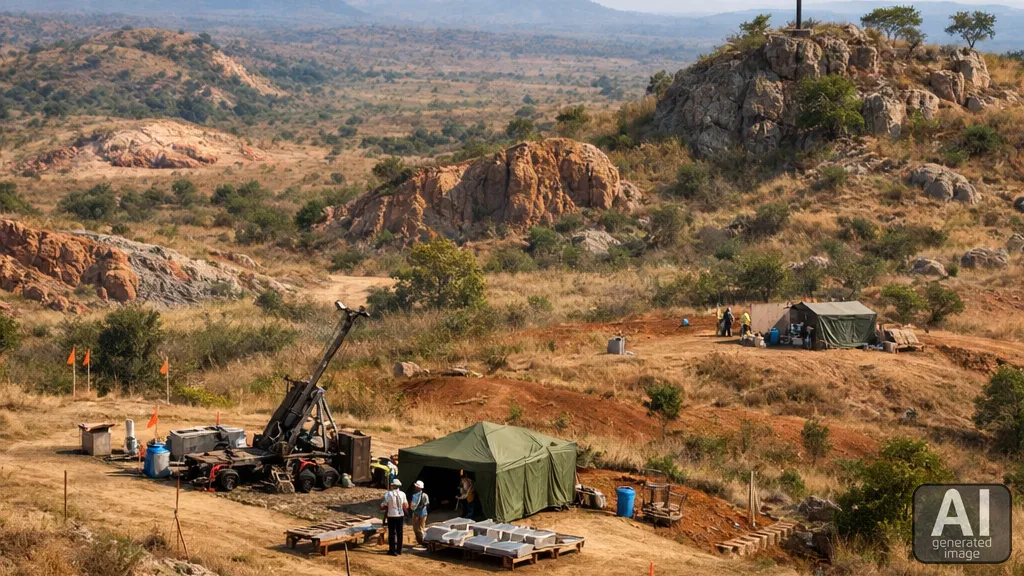
Makor Resources advances the Muli Copper Project in Zambia as a district-scale copper opportunity amid rising global demand driven by electrification.
Makor Resources is positioning its Muli Copper Project as a large, district-scale copper opportunity in Zambia, underscoring its growing strategic importance at a time when global copper demand continues to accelerate. This demand is being driven by electrification, the global energy transition, and sustained industrial growth, all of which rely heavily on secure long-term copper supply. Located in Zambia’s Central Province, the project lies within an emerging copper corridor that offers strong geological potential and significant development optionality over the long term.
The Muli Copper Project covers a large, contiguous, and relatively underexplored land position, giving it genuine district-scale potential rather than a narrow, single-target focus. The geological setting is considered prospective for intrusive-related copper systems, which are often associated with large-tonnage mineral deposits capable of supporting long-life mining operations. Being situated in one of the world’s most established copper jurisdictions further enhances the project’s credibility, as Zambia has a long history of successful copper discovery, development, and production supported by well-developed infrastructure and technical expertise.
As an early-cycle exploration asset, Muli offers Makor Resources the flexibility to pursue disciplined, system-scale exploration rather than short-term results-driven drilling. The company is applying an integrated exploration strategy that combines geological mapping, geophysical surveys, and geochemical analysis to build a comprehensive understanding of the mineral system. This methodical approach is designed to identify the scale and continuity of mineralization across the broader land package, rather than focusing solely on isolated targets.
The project also benefits from its proximity, approximately 30 kilometers, to the Kitumba Copper Project, which has helped draw regional attention to the area and strengthen exploration momentum. The presence of nearby advanced copper projects reinforces confidence in the regional geological model and supports the view that Central Province could evolve into a more prominent copper-producing district over time.
Beyond geology, Zambia’s stable regulatory framework, experienced mining workforce, and national policy emphasis on expanding copper output further enhance the strategic value of the Muli Copper Project. Makor Resources has also emphasized responsible development practices and early community engagement, recognizing that long-term project success depends on strong relationships with local stakeholders and alignment with national development goals.
Looking ahead, the advancement of the Muli Copper Project has the potential to contribute meaningfully to Zambia’s mining sector and broader economy. If successful, district-scale discoveries could support new investment, job creation, and infrastructure development, while reinforcing Zambia’s role as a key global copper supplier. In the context of Africa’s growing importance in supplying critical minerals for the global energy transition, projects like Muli highlight how early-stage, long-term exploration strategies can shape the future of the continent’s mining industry.
Mini-Glossary
- District-scale: Refers to exploration projects large enough to host multiple mineral deposits across a wide area.
- Intrusive-related copper systems: Copper deposits formed from mineralizing fluids associated with intrusive igneous rocks.
- Geophysical surveys: Techniques that measure physical properties of the Earth, such as magnetism or conductivity, to detect mineralization.
- Geochemical analysis: The study of chemical elements in rocks, soils, or fluids to identify mineral anomalies.
- Early-cycle exploration: The initial stage of exploration focused on understanding geology before advanced drilling or development.
Editor: Vural Burç ÇAKIR