
Liberia Approves Rail Access Deal to Advance Cross-Border Iron Ore Project
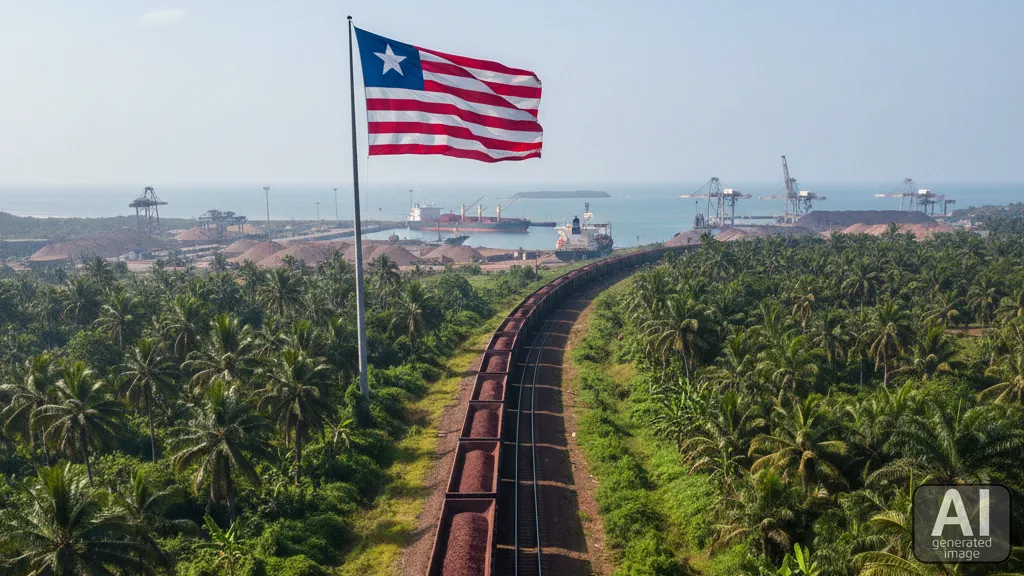
Liberia has approved a rail access deal enabling iron ore exports from Guinea, boosting regional logistics and West Africa’s iron ore supply.
Liberia has approved a landmark rail access agreement that paves the way for a new cross-border iron ore development in neighboring Guinea, strengthening regional mining logistics and reinforcing West Africa’s growing role in global iron ore supply. The deal, ratified by Liberia’s Senate and House of Representatives, grants Ivanhoe Atlantic the right to transport iron ore from Guinea to the Atlantic coast using Liberia’s existing railway infrastructure.
Under the agreement, iron ore from the Kon Kweni deposit in Guinea will be hauled along a 243 kilometre rail line to the port of Buchanan, offering the shortest and most cost-effective export route for the project. The rail corridor is currently operated by ArcelorMittal under a concession that runs until 2030, and the new access framework allows for third-party use while preserving operational continuity. Construction of the mine and related facilities is targeted to begin in early 2026, with first shipments expected in 2027.
The project is being advanced by Ivanhoe Atlantic, which plans initial production of up to 5 million tonnes of iron ore per year. A second expansion phase could lift output to around 30 million tonnes annually, supported by an estimated $850 million investment. Beyond commercial considerations, the project has a strategic dimension, as it aims to help diversify iron ore supply for the United States and reduce reliance on Chinese-controlled supply chains.
For Liberia, the agreement represents a significant economic opportunity. The government expects to earn approximately $1.4 billion in rail access fees over a 25-year period, providing a long-term revenue stream from infrastructure that is already in place. Officials also see the deal as central to Liberia’s ambition to position itself as a regional logistics hub, leveraging its rail and port assets to attract cross-border mining investment from landlocked or infrastructure-constrained neighbors.
The timing of the deal is notable, as Guinea’s iron ore profile is rising sharply alongside the development of the Simandou mega project. Together, these initiatives signal a new phase for West African iron ore, characterized by shared infrastructure, cross-border cooperation, and larger export volumes. If managed effectively, the rail access agreement could enhance regional integration, lower development costs for miners, and strengthen the competitiveness of West Africa in global iron ore markets. However, realizing these benefits will depend on stable governance, transparent access terms, and careful coordination between host countries to ensure that infrastructure-driven growth translates into broader economic gains.
Mini-Glossary
- Rail access agreement: A legal framework allowing mining companies to use existing railway infrastructure for transporting minerals.
- Cross-border project: A development that spans more than one country, often requiring shared infrastructure and regulatory coordination.
- Concession: A government-granted right allowing a company to operate and manage infrastructure or resources for a fixed period.
- Export route: The transport pathway used to move commodities from a mine to an international shipping point.
- Logistics hub: A location that serves as a central point for transport, storage, and export of goods.
Editor: Vural Burç ÇAKIR