
Layoffs Cloud Guinea’s Simandou Mega Mine Breakthrough
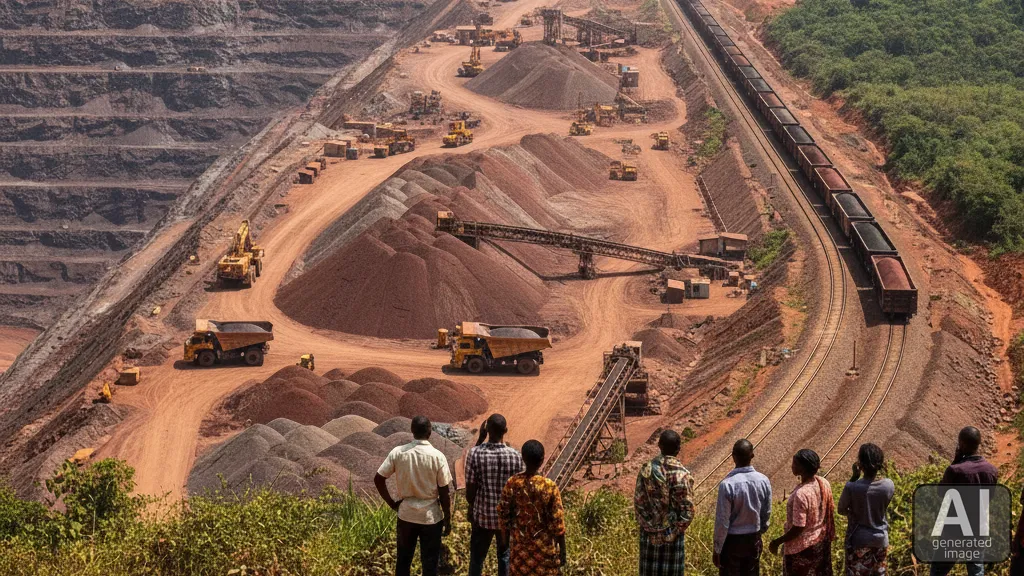
Guinea’s Simandou iron ore project has begun exports, but mass layoffs are raising concerns over social risks despite major growth potential.
Guinea has reached a long-awaited milestone with the start of iron ore exports from the Simandou project, one of the world’s largest undeveloped iron ore deposits. However, this breakthrough is being overshadowed by large-scale layoffs that have affected thousands of workers as the project transitions from construction to operations. Promoted by the country’s military-led government as a cornerstone of economic transformation, Simandou is now exposing the social risks and employment volatility associated with mega mining developments in fragile, low-income economies.
During peak construction in 2024 and 2025, employment at Simandou exceeded 60,000 jobs, spanning mine development, rail construction, and port infrastructure. As major works near completion, the workforce requirement has fallen sharply, with fewer than 15,000 employees expected to be needed for long-term operations. The resulting layoffs have left many former workers without clear alternative employment, intensifying concerns about social instability in a country where more than half of the population lives in poverty.
Simandou is operated by consortia led by Rio Tinto and the Winning Consortium Simandou, and is designed to produce up to 120 million tonnes of iron ore per year, roughly 7 percent of global supply. A key component of the project is a 670 kilometre railway linking the remote southeastern mines to a new Atlantic export port, a scale of infrastructure unprecedented in Guinea’s mining history. While the logistics network is expected to underpin long-term export growth, its construction phase has also been marked by safety incidents, including multiple reported worker and community deaths.
The Simandou project comes against the backdrop of Guinea’s broader mining dominance, as the world’s largest exporter of bauxite. Yet despite its mineral wealth, economic benefits have historically failed to translate into broad-based development. The International Monetary Fund estimates that Simandou could lift Guinea’s GDP by as much as 26 percent by 2030, largely through export earnings and fiscal revenues. However, the IMF has also warned that poverty reduction will remain limited unless mining revenues are paired with targeted social policies, skills development, and job creation beyond the extractive sector.
Looking ahead, the government has pointed to future infrastructure investments and its long-term “Simandou 2040” development plan as potential sources of new employment. Yet timelines for these initiatives remain uncertain, leaving a gap between the promise of long-term growth and the immediate realities faced by laid-off workers. For Guinea and other African countries pursuing mega mining projects, Simandou illustrates both the transformative economic potential and the acute social challenges of resource-led development, underscoring the need for stronger transition planning, labor protections, and inclusive growth strategies.
Mini-Glossary
- Mega mine: An exceptionally large mining project with global-scale production capacity.
- Construction phase: The period during which major infrastructure and facilities are built before operations begin.
- Iron ore exports: Shipments of iron-rich mineral used primarily in steel production.
- Consortium: A group of companies jointly developing and operating a project.
- Broad-based development: Economic growth that benefits a wide share of the population rather than a narrow segment.
Editor: Vural Burç ÇAKIR