
Kodal Minerals Targets a Bigger Lithium Footprint Across West Africa
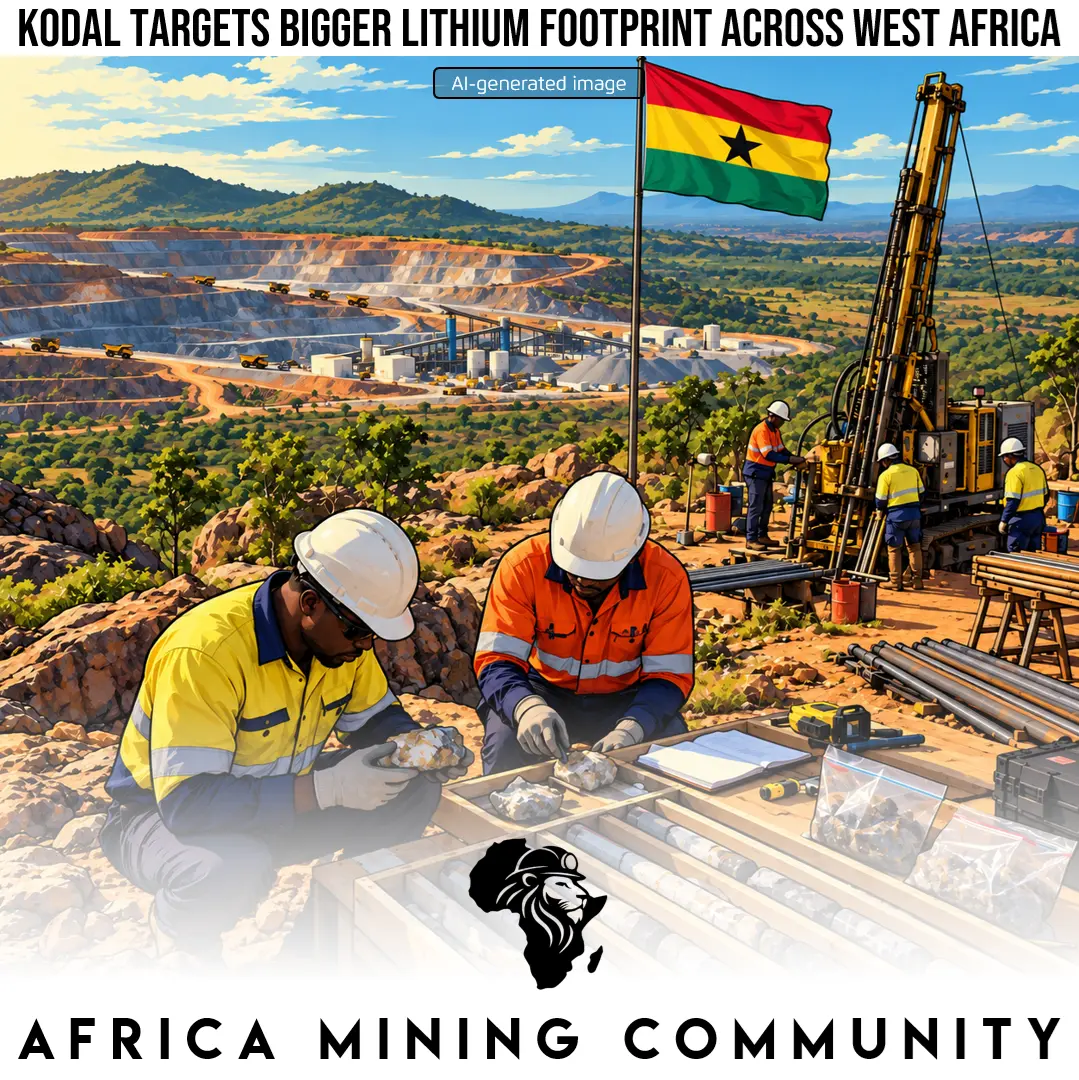
Kodal Minerals targets lithium expansion in West Africa, building on Mali's Bougouni mine and Ghana's Asamankese project amid recovering lithium prices.
Kodal Minerals is pursuing an expansion strategy aimed at strengthening its lithium portfolio across West Africa, building on its existing Bougouni lithium mine in Mali and a new exploration opportunity in Ghana. The company is seeking to establish a broader regional presence as lithium prices show signs of recovery and global demand for battery minerals continues to grow. By combining its established mining operations with additional exploration opportunities, Kodal aims to reinforce its position in West Africa's emerging lithium industry while taking advantage of the region's growing importance in the global supply of critical minerals.
The company's expansion ambitions are supported by its Bougouni lithium mine in Mali, which entered production in 2025 through a joint venture with China's Hainan. The commencement of production marked an important development for Kodal Minerals, providing an operational foundation for its wider regional growth strategy. Bougouni represents a central component of the company's lithium portfolio, allowing Kodal to build on its experience in developing mineral resources while exploring opportunities beyond its existing operations. The mine also provides a potential source of cash flow that could help finance future exploration activities and support the company's efforts to establish a more diversified lithium asset base across West Africa.
As part of this strategy, Kodal Minerals has agreed to earn up to an 80% stake in the Asamankese lithium project in Ghana, marking an important step in expanding its exploration activities into another West African mining jurisdiction. The agreement offers the company an opportunity to increase its exposure to prospective lithium resources while applying its existing regional knowledge and technical experience to a new project. Ghana's inclusion in Kodal's exploration portfolio also reflects the company's intention to pursue opportunities beyond Mali and develop a broader geographical presence within the West African mining sector.
Early exploration results from the Asamankese project have reportedly revealed similarities to the initial development stages of Bougouni, according to Kodal Minerals. These preliminary findings are particularly relevant because they allow the company to draw comparisons with a project it has already advanced into production. Although further exploration will be required to establish the extent and commercial potential of lithium mineralisation at Asamankese, the reported similarities provide an encouraging basis for continued geological investigation. Kodal's familiarity with the exploration and development processes undertaken at Bougouni could also help inform its approach to evaluating the Ghanaian project's mineral potential.
A notable aspect of Kodal's expansion strategy is its intention to finance additional exploration through existing cash reserves and cash flow generated by its mining operations, rather than issuing new shares. This financing approach reflects the company's preference for using internally available financial resources to advance its regional portfolio. By avoiding immediate reliance on additional equity fundraising, Kodal aims to pursue exploration opportunities without diluting the ownership interests of existing shareholders. The availability of operational cash flow from Bougouni could therefore play an important role in determining the pace and extent of future exploration activities, particularly as the company seeks to balance investment in new projects with the financial requirements of its producing operation.
Kodal Minerals Chief Executive Bernard Aylward has emphasised the value of the company's extensive experience in West Africa, highlighting approximately 15 to 18 years of regional involvement. According to Aylward, this experience has provided Kodal with valuable knowledge of local regulations, communities and government authorities, all of which are important considerations when developing and managing mining projects. Understanding the regulatory environment and maintaining constructive relationships with local stakeholders can influence the progress of mineral exploration and development activities. Kodal's established familiarity with the region therefore represents an important element of its strategy as it seeks to expand into additional mining jurisdictions while maintaining its existing operations.
Beyond lithium, Kodal Minerals also holds gold exploration assets in Mali and Ivory Coast, contributing to a wider regional mining portfolio. These interests provide the company with exposure to another important segment of West Africa's mineral resources industry, reflecting its broader exploration presence across the region. Although lithium remains central to its current expansion ambitions, the company's gold assets demonstrate its involvement in multiple mineral commodities and mining jurisdictions. This combination of lithium development and gold exploration activities supports a regional portfolio that extends beyond a single commodity, while allowing Kodal to draw on its established experience in West African mineral exploration.
The company's plans are also unfolding against the backdrop of improving conditions in the international lithium market. A previous downturn in lithium prices created difficulties for new mining developments, affecting the economic outlook for projects and contributing to delays across the sector. Ghana's Ewoyaa lithium project was among the developments affected by weaker market conditions, illustrating the challenges faced by emerging lithium operations during periods of reduced commodity prices. The subsequent recovery in lithium prices is beginning to improve the outlook for new projects, potentially making exploration and future development activities more attractive to mining companies seeking to expand their lithium resources.
Bernard Aylward has also pointed to growing demand from electric vehicles, energy storage systems and consumer electronics as an important factor supporting the long-term outlook for lithium. The mineral plays a significant role in rechargeable battery technologies, linking its future market prospects to the continued expansion of these industries. Increasing electric vehicle adoption, the development of energy storage infrastructure and sustained demand for battery-powered electronic devices are expected to remain important sources of lithium consumption. For companies such as Kodal Minerals, these demand trends provide a broader commercial context for pursuing additional lithium exploration opportunities and building production capacity over the longer term.
West Africa's mining industry is also experiencing increasing interest in critical minerals as governments seek to diversify their mineral economies beyond traditional commodities. The region has historically been recognised for its substantial gold production, with mining activities forming an important part of economic development in several countries. However, the growing strategic importance of lithium and other battery-related minerals is creating opportunities to broaden the region's mineral production profile. As international demand for critical minerals develops, West African countries are seeking to attract investment into emerging mineral resources while exploring ways to capture greater economic value from their mining industries.
For Mali and Ghana, the expansion of lithium exploration and production activities could contribute to a more diversified mining sector and create additional opportunities for investment, employment and government revenue. The development of new mineral resources may also encourage greater attention to local participation and value creation within the mining industry. However, the scale of these potential benefits will depend on the successful identification of commercially viable deposits, supportive market conditions and the ability of mining companies to advance projects responsibly and efficiently.
Kodal Minerals' ambitions to expand its lithium footprint across West Africa reflect the increasing importance of battery minerals within the region's evolving mining landscape. The combination of Bougouni's production capacity, the exploration potential of Ghana's Asamankese project and the company's established regional experience could provide a foundation for further growth if geological results and market conditions remain favourable. More broadly, the company's strategy illustrates how recovering lithium prices and growing demand from battery-related industries may encourage renewed investment in West African mineral resources. For countries such as Mali and Ghana, these developments could support mining diversification, attract additional exploration capital and strengthen their participation in global critical mineral supply chains, although the long-term economic impact will ultimately depend on project viability, market stability and the extent to which mineral development generates sustainable benefits for local economies.
Mini-Glossary
- Lithium Portfolio: A collection of lithium mining operations, exploration projects and mineral interests held by a company.
- Critical Minerals: Minerals considered strategically important for industries such as renewable energy, battery manufacturing and advanced technologies.
- Joint Venture: A business arrangement in which two or more companies cooperate to develop or operate a project while sharing agreed responsibilities and economic interests.
- Earn-Up-to Agreement: An arrangement allowing a company to acquire a specified ownership percentage in a project by fulfilling agreed investment or development commitments.
- Lithium Mineralisation: The natural occurrence or concentration of lithium-bearing minerals within geological formations.
- Cash Flow: Money generated and spent through a company's business activities, including mining operations.
- Equity Fundraising: The process of raising capital by issuing shares to investors.
- Shareholder Dilution: A reduction in existing shareholders' percentage ownership following the issuance of additional company shares.
- Mining Jurisdiction: A country or administrative territory with its own mining laws, regulations and licensing requirements.
- Commodity Prices: Market prices for raw materials such as lithium, gold and other mineral resources.
- Critical Mineral Supply Chains: The interconnected processes involved in extracting, processing, transporting and supplying strategically important minerals to industrial users.
- Mining Diversification: The expansion of a mining sector into additional commodities, projects or activities to reduce dependence on a limited range of mineral resources.