
Kamoa-Kakula Copper Smelter Begins Heat-Up, Marking a New Era for DRC Copper Production
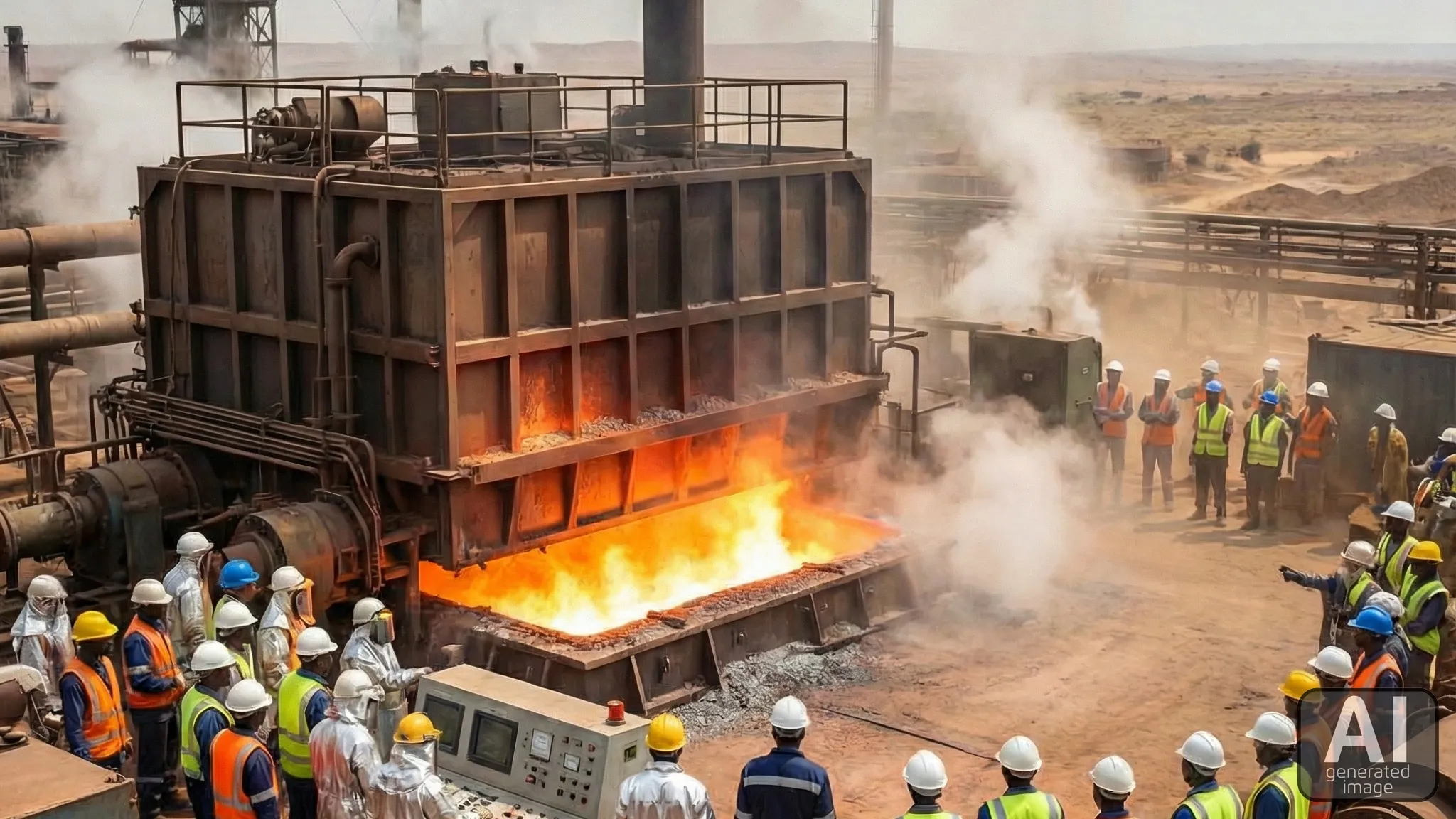
Kamoa Kakula begins smelter heat up, marking a major step in DRC copper production with advanced systems, cultural traditions, and 2026 output growth ahead.
The commencement of heat up at the 500,000 tonnes per annum Kamoa Kakula copper smelter marks a defining moment for both Ivanhoe Mines and the Democratic Republic of Congo, signalling the transition of the project into its next phase of industrial maturity. Launched through a traditional blessing and opening ceremony on 21 November 2025, the event highlighted the deep integration of cultural heritage into one of Africa’s most technologically advanced mineral processing initiatives. This blending of tradition and innovation reinforced the project’s importance to surrounding communities and underscored the broader vision of establishing the Lualaba Province as a world leading hub for copper production.
During the ceremony, the Chief of the local communities led a symbolic ritual that positioned the smelter as a transformative catalyst for regional development. A ceremonial flame, transferred from a traditional furnace to the new facility, represented continuity with the past while celebrating the promise of industrial progress. Project leaders stressed that the smelter is expected to deliver wide ranging benefits for the Kamoa Kakula district, the wider Lualaba Province, and the national economy by enhancing the domestic value addition of DRC mined copper. The first feed of Kamoa Kakula concentrate is anticipated before year end, marking the start of a new operational era.
As the smelter enters controlled heating, technical preparations continue at an accelerated pace. The furnace temperature has already reached 800°C, with an additional nine days of gradual heat increase planned to ensure structural stability and metallurgical readiness. Parallel commissioning activities include the boiler, steam systems, concentrate dryer, electrodes, and the critical acid circuit needed for safe and efficient smelting operations. On site copper inventory, which stood at roughly 37,000 tonnes before start up, is expected to decline as the smelter ramps up production throughout 2026. Remaining excess concentrate will continue to be toll treated at the Lualaba Copper Smelter in Kolwezi, ensuring uninterrupted processing during the early phases of operation.
To safeguard the reliability of smelter performance, Ivanhoe Mines has also strengthened power resilience at the Kamoa Kakula complex. A new 60 MW uninterruptible power supply system has been installed to shield the facility from grid voltage fluctuations, a known challenge in regional power infrastructure. Combined with approximately 180 MW of diesel based backup generation capacity, the site now possesses a robust multi layer energy security framework that reduces operational risks and mitigates potential downtime during ramp up.
In the wider context of Africa’s mining industry, the successful heat up of the Kamoa Kakula smelter signals a shift toward greater in country beneficiation, stronger industrial integration, and increased competitiveness of African copper on global markets. The project’s blending of cultural tradition with advanced metallurgy sets a benchmark for responsible development and reinforces the DRC’s emerging role as a global leader in copper production and processing. As the smelter moves toward full production in 2026, its influence is expected to extend across the regional economy, supporting job creation, technology transfer, and more resilient mineral value chains.
Mini Glossary
- Heat up: The controlled process of heating a smelter furnace to operational temperature.
- Concentrate: A high grade mineral product obtained after ore processing that requires smelting to produce metal.
- Toll treatment: Outsourcing of concentrate processing to another smelter for a fee.
- Uninterruptible power supply (UPS): A system that provides stable backup power to protect equipment from grid fluctuations.
- Beneficiation: The process of increasing the economic value of mined ore by improving its grade or transforming it into higher value products.
Editor: Vural Burç ÇAKIR