
IFC backs Malawi graphite as Sovereign Metals advances Kasiya project
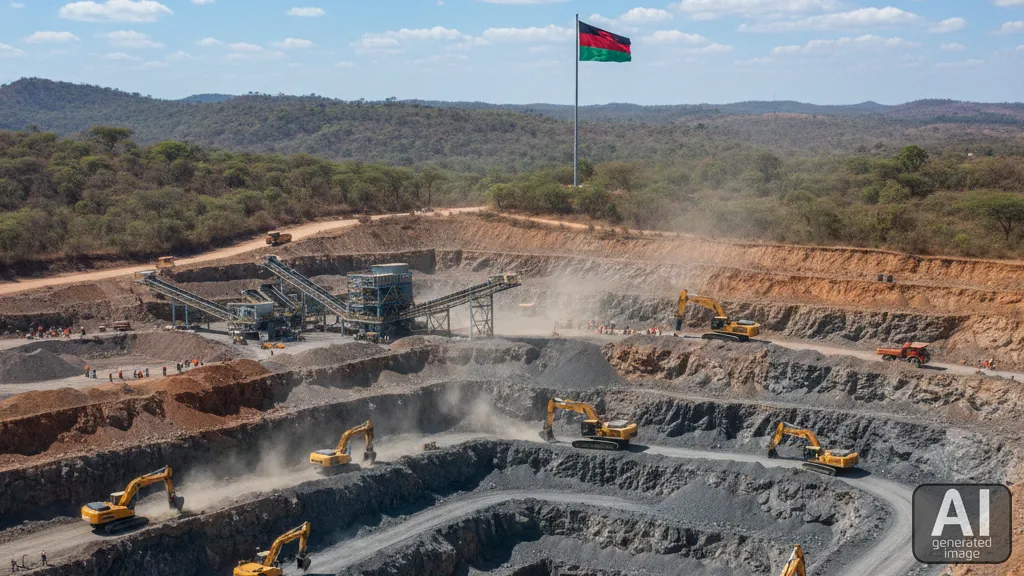
IFC backs Sovereign Metals’ Kasiya project in Malawi, highlighting rising global support for African graphite and rutile supply chains.
Sovereign Metals has taken a significant step forward in advancing its Kasiya rutile graphite project in Malawi by securing formal support from the World Bank’s International Finance Corporation. This agreement strengthens the project’s development pathway and signals growing international confidence in Malawi as an emerging hub for critical minerals. It also reflects broader global efforts to diversify mineral supply chains at a time when demand for battery and energy transition materials continues to accelerate.
Under the agreement, Sovereign Metals will work closely with the International Finance Corporation, which is part of the World Bank Group, to support the ongoing development of the Kasiya project. While the arrangement does not guarantee immediate funding, it positions the IFC as a potential financier should Sovereign decide to raise capital for construction. IFC involvement is often seen as a strong endorsement, as it brings not only financing capacity but also rigorous environmental, social, and governance standards that can help de-risk large-scale mining developments.
Sovereign’s strategy is further underpinned by the backing of Rio Tinto, which holds an 18.45 percent equity stake in the company. This shareholding adds technical credibility and long-term strategic weight to the Kasiya project, especially given Rio Tinto’s global experience in developing and operating tier-one mineral assets. The combination of IFC support and a major mining partner significantly enhances Sovereign’s ability to progress Kasiya toward production.
The Kasiya project itself is notable for its scale and unique mineral mix. It is recognized as the world’s largest known rutile deposit and the second largest natural graphite deposit globally. Rutile is a high-grade titanium mineral used in pigments, aerospace applications, and advanced manufacturing, while graphite is a critical input for lithium-ion batteries used in electric vehicles and energy storage systems. The presence of both minerals within a single, large, low-strip, open-pit operation makes Kasiya particularly attractive from a development and cost perspective.
From a geopolitical standpoint, the partnership highlights increasing Western efforts to secure reliable sources of critical minerals outside of China, which currently dominates much of the global graphite supply chain. Graphite has been officially designated as a critical mineral by the United States due to its importance for economic resilience and national security. As electric vehicle adoption accelerates, demand for battery-grade graphite is expected to rise sharply, intensifying competition for secure and transparent supply sources.
Looking ahead, the IFC agreement positions Kasiya as a strategically important project not only for Sovereign Metals but also for Malawi’s broader mining sector. Successful development could attract further international investment, improve infrastructure, and enhance the country’s role in global critical mineral markets. More broadly, projects like Kasiya have the potential to anchor Africa more firmly within the global energy transition supply chain, providing economic diversification opportunities while supporting the shift toward cleaner energy technologies.
Mini-Glossary
- International Finance Corporation (IFC): The private sector lending arm of the World Bank Group, focused on supporting development projects in emerging markets.
- Critical minerals: Minerals considered essential for economic and national security, often with limited or concentrated global supply.
- Rutile: A titanium dioxide mineral used in pigments, welding rods, and high-performance industrial applications.
- Graphite: A form of carbon widely used in electric vehicle batteries as a key component of battery anodes.
- Supply chain diversification: Efforts to reduce dependence on a single country or region for key raw materials.
Editor: Vural Burç ÇAKIR