
Guinea’s Simandou Supports Iron Ore Supply as Producers Face Pressure
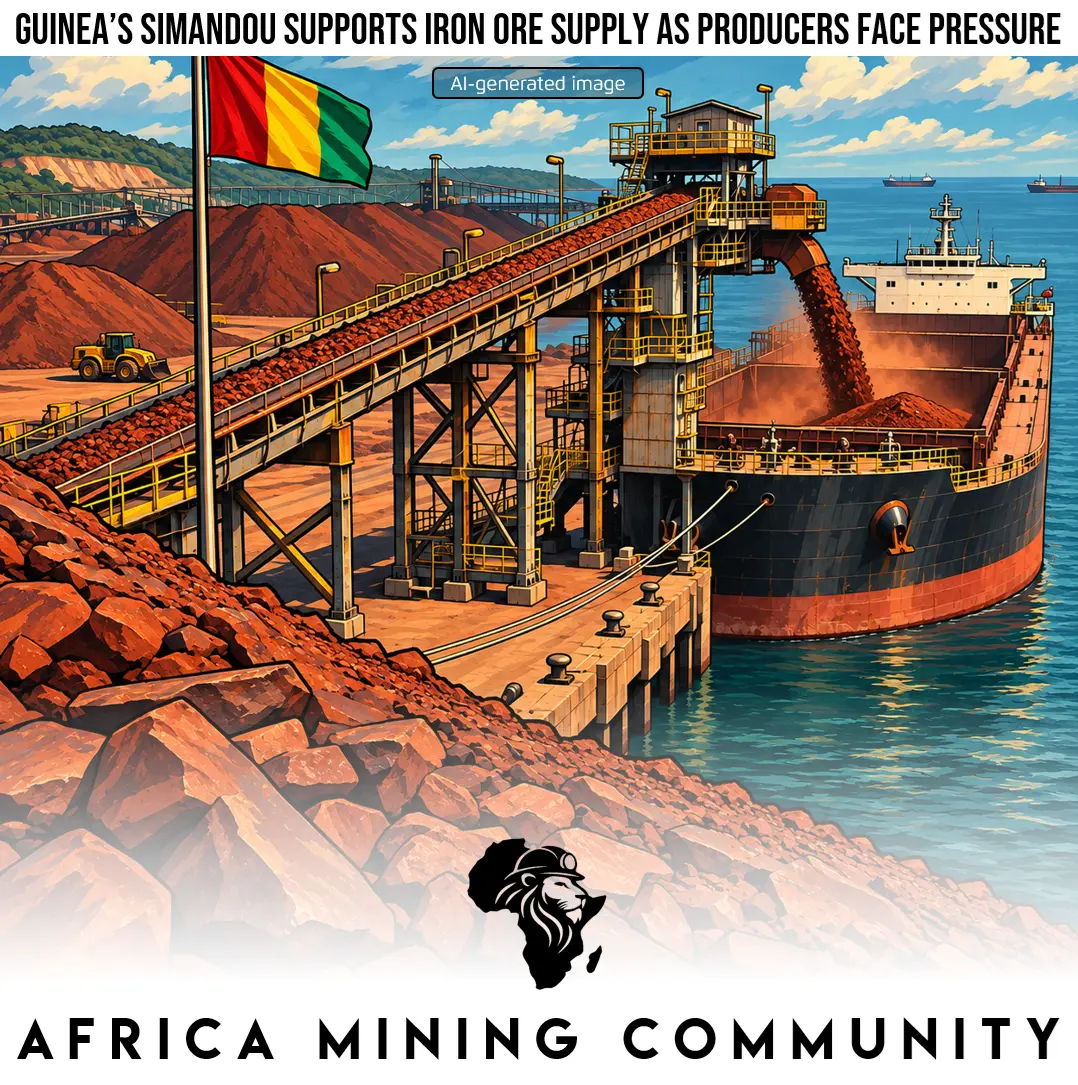
Guinea’s Simandou boosts global iron ore supply as falling prices and rising costs squeeze producers, strengthening Africa’s mining outlook.
Guinea’s Simandou iron ore project is emerging as an increasingly important contributor to global iron ore supply, helping offset production declines in other major mining regions as the industry faces mounting financial and operational pressures. According to analysts at Macquarie Group, the progressive ramp-up of Simandou’s production and exports has supported international seaborne iron ore volumes at a time when weaker commodity prices, elevated freight rates and rising diesel costs are undermining the profitability of higher-cost producers. The development highlights Guinea’s expanding role in the global iron ore market, particularly as mining companies adjust their production strategies in response to deteriorating market conditions and shifting international demand.
Macquarie analysts, including Florence Sun, indicated that Simandou’s growing export volumes have provided an important buffer against supply reductions elsewhere in the industry. The analysts estimated that Guinea’s full-year iron ore exports could reach approximately 28 million tons if shipment levels recorded in October are maintained throughout the relevant period. However, achieving this volume would depend on favourable weather conditions, which remain an important operational consideration for mining and bulk commodity transportation in West Africa. Seasonal rainfall, port accessibility and logistical efficiency can influence the consistency of shipments, particularly as large-scale mining operations expand their production and transportation capacity.
The increase in Simandou’s contribution comes amid a challenging pricing environment for iron ore producers worldwide. International iron ore prices have declined approximately 24% from their May peak, falling below $90 per ton in the previous month. This downward movement has intensified financial pressure across the sector, particularly for operations with relatively high extraction, processing and transportation costs. In addition to weaker selling prices, elevated maritime freight rates and diesel expenses have further compressed operating margins, reducing the profitability of producers that rely heavily on long-distance shipping and fuel-intensive mining activities.
The financial implications of lower iron ore prices could be substantial. UBS estimated that as much as 170 million tons of global iron ore production could become economically unviable if prices fall below $90 per ton. This suggests that a prolonged period of weaker prices could force higher-cost producers to reduce output, suspend operations or reconsider future capital expenditure. The pressure is particularly significant for mining companies operating deposits with lower ore grades, challenging geological conditions or limited transport infrastructure. By comparison, large-scale projects capable of achieving competitive production costs and efficient export logistics may be better positioned to withstand prolonged periods of market weakness.
Despite these pressures, Macquarie anticipates that overall iron ore supply will increase by approximately 14 million tons in 2026, reflecting the contribution of expanding operations such as Simandou. This projected growth is expected to occur alongside a 4.5% decline in Chinese iron ore production, highlighting a potential shift in the geographical distribution of global supply. As domestic Chinese output contracts, internationally traded iron ore could become increasingly important for meeting the raw material requirements of the country's steel industry. However, the extent of this opportunity will depend on steel production levels, industrial demand and the competitiveness of imported ore relative to domestic alternatives.
Guinea’s recent export performance illustrates the rapid development of its iron ore sector. According to government data, the country exported approximately 8.9 million tons of iron ore during the third quarter, compared with 6 million tons in the preceding quarter. This represents an increase of approximately 48%, demonstrating the acceleration of export activity as the Simandou project progresses. The expansion reflects the growing contribution of the project's mining operations and associated transportation infrastructure, which are essential for moving iron ore from inland deposits to international markets.
The Simandou deposit is divided into four mining blocks operated through two principal project groups. Baowu Winning Consortium Simandou controls one portion of the development, while Simfer, a joint venture involving Rio Tinto Group and Chinalco, is responsible for the other. During the third quarter, Baowu-Winning accounted for approximately 6.55 million tons of Guinea’s iron ore exports, making it the largest contributor to the country's reported shipments. Simfer exported approximately 2.16 million tons during the same period, demonstrating the growing commercial contribution of both project groups. Together, these operations account for the overwhelming majority of Guinea's third-quarter iron ore exports and underline Simandou's importance to the country's emerging position as a major supplier.
Beyond its immediate contribution to international iron ore availability, Simandou represents a significant structural development for Guinea’s mining industry. The project's scale, combined with investment in rail infrastructure, port facilities and supporting logistics, has the potential to improve the country's capacity to commercialise its mineral resources. As export volumes increase, Guinea could benefit from higher mining-related revenues, expanded economic activity, employment opportunities and greater demand for local goods and services. Nevertheless, realising these benefits sustainably will require effective infrastructure management, transparent revenue administration, environmental safeguards and stronger integration between mining operations and domestic businesses.
From a broader African mining perspective, Simandou's expansion could strengthen the continent's position in global iron ore trade while introducing additional competitive pressure on established producers. Its increasing supply contribution may help stabilise international shipment volumes, but it could also contribute to continued price weakness if global demand fails to absorb additional production. For Guinea, sustained export growth offers opportunities to diversify an economy heavily dependent on mineral resources, attract further infrastructure investment and increase government revenue. However, the long-term economic impact will depend on production efficiency, international price movements, market demand and the country's ability to convert mining revenues into lasting economic development. Simandou's progression therefore represents both a major opportunity for Guinea and an important development in the changing competitive landscape of Africa's mining industry.
Mini-Glossary
- Seaborne Iron Ore: Iron ore transported internationally by cargo ships, primarily to supply steelmaking industries.
- Ramp-Up: The gradual increase in mining production and export capacity as a project moves toward its planned operating level.
- Operating Margins: The difference between revenue generated from operations and the costs required to maintain those operations.
- Freight Rates: Charges associated with transporting commodities, particularly by sea.
- Capital Expenditure: Investment in long-term assets such as mining equipment, processing facilities, railways and ports.
- Ore Grade: The concentration of valuable minerals within extracted rock, which influences processing requirements and production economics.
- Bulk Commodity: A raw material, such as iron ore or coal, transported in large quantities without individual packaging.
- Export Logistics: The infrastructure, transportation systems and operational processes required to move products from production sites to international markets.
- Economically Unviable Production: Mining output that cannot generate sufficient revenue to cover its associated production and operating costs.
- Structural Development: A major long-term change that influences the organisation, capacity or competitiveness of an industry or economy.