
Ghana Tightens Mining Rules, Orders Global Giants to Localize Operations by 2026
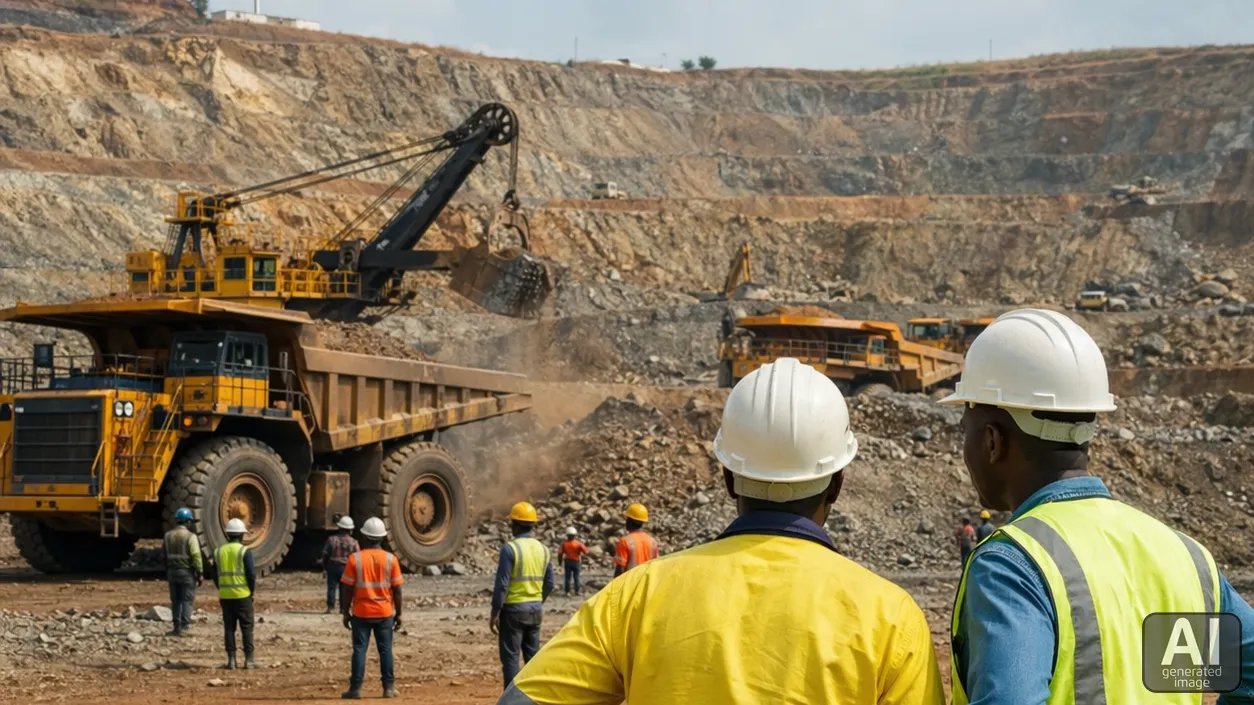
Ghana orders major miners to localize operations by 2026, boosting local ownership and reshaping the future of its gold sector.
Ghana is intensifying its efforts to deepen local participation in the mining sector by requiring major international operators to localize key aspects of their mining activities by the end of 2026. Under updated local ownership regulations introduced in 2025, the country’s mining regulator has directed leading global companies, including Newmont, AngloGold Ashanti, and Zijin, to shift their mining operations to locally owned contractors or risk regulatory sanctions. This policy marks a significant step in Ghana’s strategy to ensure that a greater share of the economic benefits generated from its gold resources remains within the domestic economy.
The revised framework makes contract mining mandatory for all operators and sets clear ownership thresholds based on the type of mining activity. For surface mining operations, contractors must be fully Ghanaian-owned, while underground mining operations must have at least 50 percent local ownership. According to the regulator, most of the large mining companies operating in Ghana have already adjusted to this model, leaving only a handful of major multinational firms yet to comply. The inclusion of well-known global players such as Newmont, AngloGold Ashanti, and Zijin highlights the government’s determination to apply the rules consistently across the sector, regardless of the scale or international stature of the companies involved.
Although affected companies reportedly sought extensions to give themselves more time to restructure their operating models, Ghanaian authorities have made it clear that no delays beyond December 2026 will be accepted. This firm stance signals a tougher regulatory posture and reinforces the country’s intention to move from policy announcement to actual enforcement. The consequences of non-compliance could be severe, ranging from substantial financial penalties to the suspension or shutdown of mining operations. By setting a fixed deadline and rejecting further postponements, the regulator is sending a strong message that local ownership requirements are no longer optional or negotiable, but a core component of Ghana’s mining governance framework.
At the heart of the policy is Ghana’s broader economic objective of retaining more value from its mineral wealth. For years, many African resource-producing countries have faced criticism that foreign-dominated mining structures allow a significant portion of profits, procurement spending, and technical opportunities to flow outside the local economy. Ghana’s new rules are designed to reverse that pattern by building indigenous mining capacity, expanding the role of domestic contractors, and creating stronger linkages between mineral extraction and national development. Local firms such as Rocksure and Engineers & Planners are expected to be among the key beneficiaries, as they stand to secure larger operational mandates and strengthen their position in one of Africa’s most important gold-producing markets.
This development also reflects a wider continental trend in which African governments are tightening mining regulations in response to elevated commodity prices and increasing pressure to capture more long-term value from natural resources. Rather than relying solely on royalties and taxes, policymakers are increasingly focused on localization, beneficiation, domestic procurement, and broader participation by national firms. In this context, Ghana appears confident that its local mining companies now possess the technical expertise, operational maturity, and financial capacity to assume greater responsibilities that were previously dominated by multinational contractors.
The possible impact of this policy on Ghana’s mining industry and the wider African economy could be substantial. If implementation is managed effectively, the rules could stimulate local enterprise development, increase domestic capital formation, generate skilled employment, and improve value retention within Ghana’s economy. Over time, this may help create a more resilient mining ecosystem with stronger national supply chains and greater bargaining power for host governments across Africa. However, the success of the reform will depend on whether local contractors can maintain productivity, safety standards, and financing capacity at scale. For Ghana and other African mining jurisdictions, this policy could become an important test case for how resource nationalism, when balanced with operational efficiency and investor confidence, can reshape the continent’s extractive sector for more inclusive and sustainable growth.
Mini-Glossary
- Contract mining: A business arrangement in which a mining company hires another company to carry out mining operations on its behalf.
- Local ownership regulations: Rules that require businesses in a sector to be partly or fully owned by citizens or domestic firms.
- Regulatory sanctions: Penalties or enforcement actions imposed by authorities for breaking rules.
- Surface mining: Mining conducted near the earth’s surface, often through open-pit methods.
- Underground mining: Mining that takes place below the earth’s surface through tunnels or shafts.
- Economic value retention: Keeping a larger share of profits, spending, and benefits within the local economy.
- Mining governance framework: The overall system of laws, regulations, institutions, and policies that govern the mining sector.
- Beneficiation: The process of increasing the value of raw minerals before export, often through processing or refining.
- Domestic procurement: The practice of purchasing goods and services from local suppliers rather than foreign ones.
- Resource nationalism: A policy approach in which governments seek greater control and larger economic benefits from natural resources.
Editor: Vural Burç ÇAKIR