
Ghana Plans to Ban Raw Mineral Exports by 2030 in Major Industrialization Push
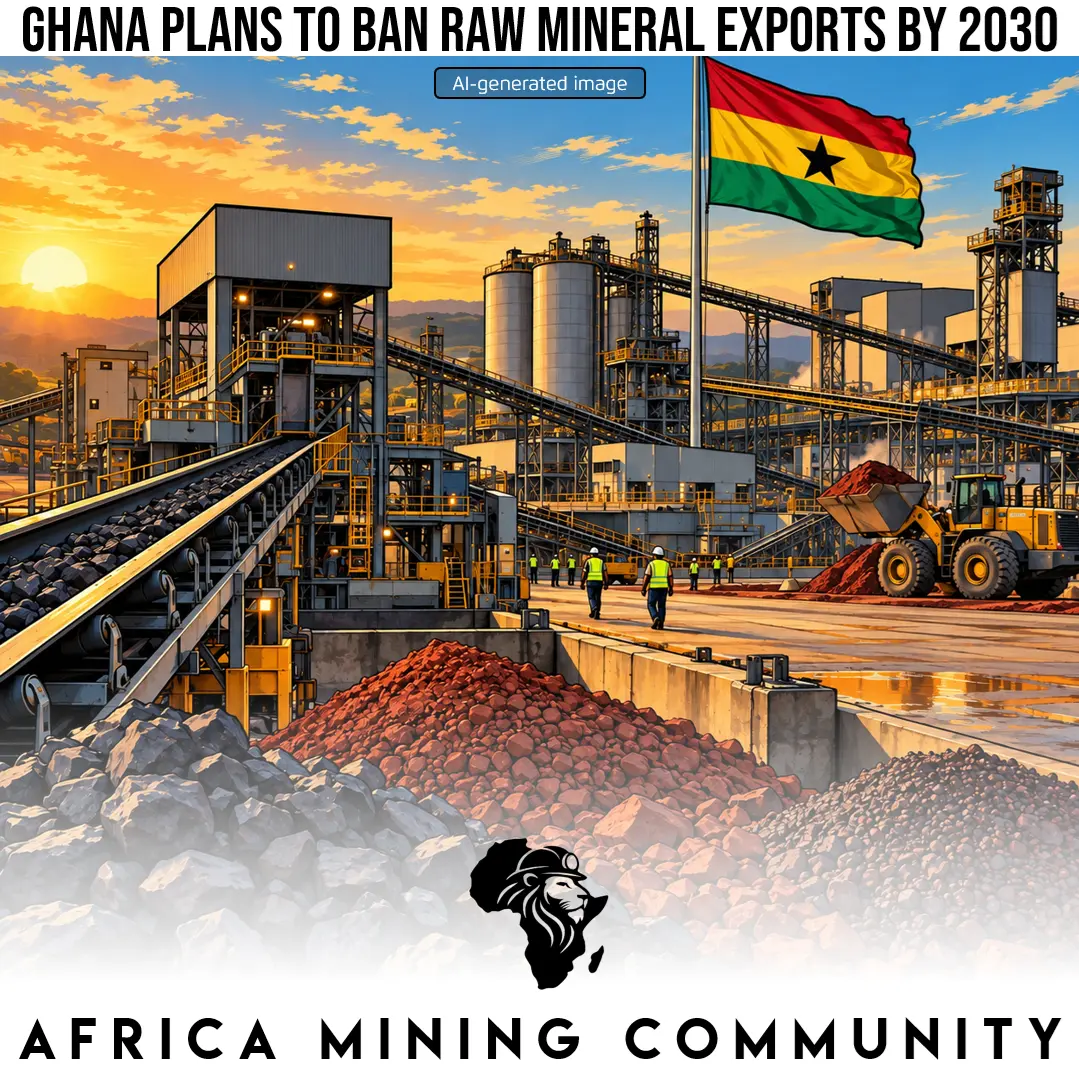
Ghana plans to ban raw mineral exports by 2030, boosting local processing of bauxite, manganese and lithium to drive industrial growth and jobs.
Ghana is preparing to introduce a sweeping ban on exports of unprocessed mineral ores by 2030, marking a significant shift in its mining and industrial development strategy. The initiative aims to accelerate domestic mineral processing, attract investment into value-added industries, create skilled employment opportunities, and ensure that the country captures a greater share of the economic benefits generated from its natural resources. President John Dramani Mahama announced the policy during the Mining in Motion Conference in Accra on October 19, 2026, emphasizing the government's determination to transform Ghana from a predominantly raw-material exporter into a more diversified mineral-processing and manufacturing economy.
Under the proposed framework, export restrictions will cover several strategically important minerals, including bauxite, manganese, iron ore, and lithium, with potential implications for other mineral commodities. Rather than introducing an immediate blanket prohibition, the government intends to implement the restrictions progressively through new legislation, mineral-specific processing requirements, and clearly defined implementation schedules. This phased approach is designed to provide mining companies, investors, and other industry stakeholders with sufficient time to develop processing infrastructure, adjust commercial arrangements, and establish domestic supply chains. The government expects these measures to encourage the production of refined minerals, intermediate industrial materials, and higher-value manufactured products within Ghana.
President Mahama stressed that Ghana's mineral wealth should serve as a foundation for domestic industrialization instead of primarily supplying raw materials to overseas manufacturers. For decades, the country has exported substantial quantities of mineral resources that undergo further processing abroad, limiting its participation in more profitable stages of the mineral value chain. The proposed policy seeks to reverse this pattern by promoting domestic beneficiation, strengthening industrial linkages, and facilitating technology transfer. In practical terms, the strategy could support the establishment of manganese-processing facilities, bauxite refineries, aluminium manufacturing operations, and industrial plants capable of supplying materials to the construction, automotive, energy, and infrastructure sectors.
The planned restrictions build on existing government interventions aimed at retaining valuable mineral resources and recyclable industrial materials within the national economy. Ghana has already prohibited exports of iron scrap and certain non-ferrous metals, while restrictions have also been introduced on exports of unrefined gold produced through designated artisanal and small-scale mining supply arrangements. These measures reflect a broader policy direction that increasingly prioritizes local refining, formalized mineral trading, domestic processing capacity, and greater oversight of mineral supply chains.
The transition will also reshape expectations for international mining companies and prospective investors. Under the proposed regulatory framework, access to Ghana's mineral deposits will increasingly be linked to obligations concerning domestic processing and industrial development. Companies seeking new mineral rights or negotiating investment agreements may therefore need to incorporate refining facilities, processing partnerships, and local supply-chain development into their business strategies. Established international mining groups with operations or interests in Ghana, including AngloGold Ashanti, Gold Fields, and Zijin Mining Group, operate within a mining sector that could experience wider changes in investment priorities and regulatory expectations. However, the precise implications for individual companies will depend on the final legislation, the minerals covered, and the terms of their existing agreements.
Ghana's manganese industry is particularly important to the proposed transformation because of the country's position among the world's major suppliers of the mineral. Manganese is an essential input for steelmaking and is increasingly relevant to certain battery technologies, giving it strategic importance across global industrial supply chains. Ghana also possesses substantial bauxite resources, although its present level of production remains relatively modest compared with leading international producers. Developing domestic facilities for processing these commodities could allow the country to expand into higher-value industrial activities, including alumina refining, aluminium manufacturing, and the production of processed manganese materials. Such investments would require reliable electricity supplies, modern transport infrastructure, specialized technical expertise, and substantial long-term financing.
Ghana's policy also forms part of a wider African movement toward mineral beneficiation and resource-based industrialization. Across the continent, governments are introducing export controls, revising mining regulations, and encouraging investments in domestic processing facilities to reduce dependence on raw commodity exports. Guinea is pursuing major alumina refinery projects, while Zimbabwe introduced restrictions on raw mineral and lithium concentrate exports in February 2026. Similar developments are taking place in West Africa's gold industry. Burkina Faso inaugurated its first gold refinery in September 2026, Mali has begun constructing a new refining facility, and Côte d'Ivoire is planning to establish a gold refinery by the first half of 2027. These developments highlight a growing regional emphasis on retaining more mineral-processing revenue, developing industrial capacity, and increasing African participation in global mineral supply chains.
For Ghana and Africa's wider mining industry, the proposed 2030 export ban could significantly influence future investment patterns, mineral trade flows, and industrial development. Successful implementation could stimulate investment in refineries and processing plants, increase demand for skilled workers, strengthen domestic manufacturing, and diversify export earnings beyond unprocessed commodities. However, achieving these objectives will depend heavily on the availability of affordable electricity, efficient transport networks, access to financing, technological capabilities, and a stable regulatory environment. Mining companies may also face higher capital expenditure requirements and additional operational costs as they adapt to domestic processing obligations. If processing infrastructure develops more slowly than the export restrictions, the policy could create temporary disruptions to mineral production and international supply agreements. Ultimately, the economic impact will depend on Ghana's ability to balance industrial development ambitions with commercial competitiveness, investor confidence, and the long-term sustainability of its mining sector.
Mini-Glossary
- Mineral beneficiation: Processing raw minerals to improve their quality, purity, or commercial value before sale or export.
- Value addition: Increasing the economic value of a raw material through processing, refining, or manufacturing.
- Industrialization: Developing manufacturing industries and production facilities to support economic growth.
- Mineral value chain: The sequence of activities through which minerals move from extraction to processing, manufacturing, and final consumption.
- Non-ferrous metals: Metals that do not contain significant amounts of iron, such as copper, aluminium, and zinc.
- Artisanal and small-scale mining (ASM): Mining activities conducted by individuals, small groups, or enterprises, often using relatively simple equipment.
- Alumina refining: The industrial process of converting bauxite into aluminium oxide, which is subsequently used to produce aluminium metal.
- Downstream processing: Industrial activities that transform extracted raw materials into refined minerals, intermediate products, or finished goods.
- Capital expenditure (CAPEX): Money invested in acquiring, constructing, or upgrading long-term assets such as processing plants and industrial equipment.