
Ghana Discards VAT on Mineral Exploration to Boost Investment
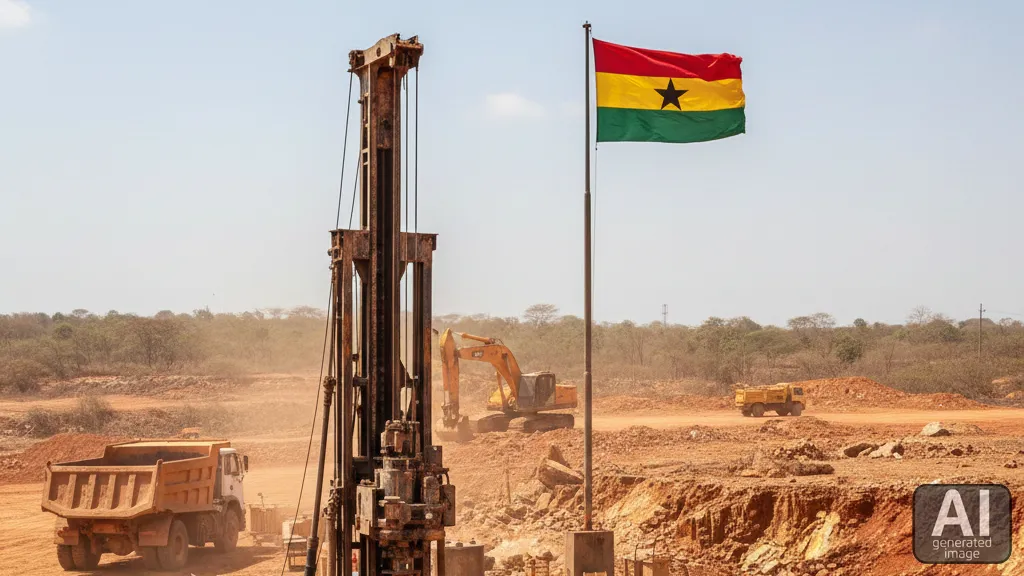
Ghana removes VAT on mineral exploration to boost investment, enhance competitiveness, and strengthen oversight in its gold driven mining sector.
Ghana has taken a significant step to enhance its investment climate by abolishing value added tax on mineral exploration and reconnaissance activities. This policy shift, announced by Finance Minister Cassiel Ato Forson, is intended to revive investor confidence and increase the pace of greenfield mining development. For more than two decades, the previous tax regime created cost burdens for early stage exploration, weakening the country’s attractiveness compared to other African mining jurisdictions. The reform positions Ghana to reclaim its competitive edge and signals a broader commitment to improving the operational landscape of its mining sector.
The removal of the 15 percent VAT directly reduces upfront expenditures associated with drilling, geological surveys, and assay analyses, which are essential but capital intensive components of mineral exploration. For years, industry associations argued that the tax generated unnecessary financial obstacles and pushed exploration companies toward alternative destinations in Africa where early stage taxation was more favorable. By eliminating this cost element, Ghana aims to stimulate new project pipelines, attract junior exploration companies, and diversify the mining asset base. This change is aligned with an ongoing review of the broader VAT framework and represents one of the most impactful adjustments within the country’s mining policy agenda.
The reform complements several recent initiatives aimed at strengthening regulatory oversight and promoting responsible mining practices. Ghana has intensified efforts to curb unregulated prospecting, protect sensitive ecosystems, and enhance governance in artisanal and small scale mining. These measures take place in the context of robust gold export performance, with small scale shipments reaching 81.7 t valued at approximately US$8.1 billion between January and October, while large scale operations exported 74.1 t valued at around US$6.6 billion. The government expects total annual gold output to reach roughly 144.5 t in 2025, supported by improved monitoring systems and renewed investor engagement. An audit of the mining sector is also underway to enhance revenue capture and reduce leakage across the value chain.
Industry stakeholders, including the Ghana Chamber of Mines, have responded positively to the VAT removal, noting that it enhances Ghana’s competitiveness at a time when global gold producers and exploration firms are evaluating new frontiers. With mining contributing more than one third of national export earnings, policy stability and investment friendly regulations are essential to sustaining economic growth. Major multinational operators already active in Ghana stand to benefit from renewed exploration momentum, while junior firms may find project initiation significantly more feasible under the updated fiscal regime.
Overall, the VAT abolition is likely to strengthen Ghana’s mining industry by attracting increased exploration capital, broadening the project pipeline, and reinforcing regulatory discipline. The combined impact of fiscal reforms, stronger oversight of artisanal mining, and improved revenue governance positions Ghana to consolidate its leadership in Africa’s gold sector, enhance foreign exchange earnings, and support long term economic resilience across the mining value chain.
Mini Glossary
- Greenfield investment: Investment in new, undeveloped mining projects.
- Assay work: Laboratory analysis used to determine the mineral content of rock samples.
- Artisanal mining: Small scale, often manual mining activities.
- Exploration pipeline: The sequence of potential mining projects under investigation or development.
- Revenue capture: The ability of a government to collect the appropriate share of income from natural resource activities.