
Gabon Launches Mining Contract Audit Amid IMF Reform Talks
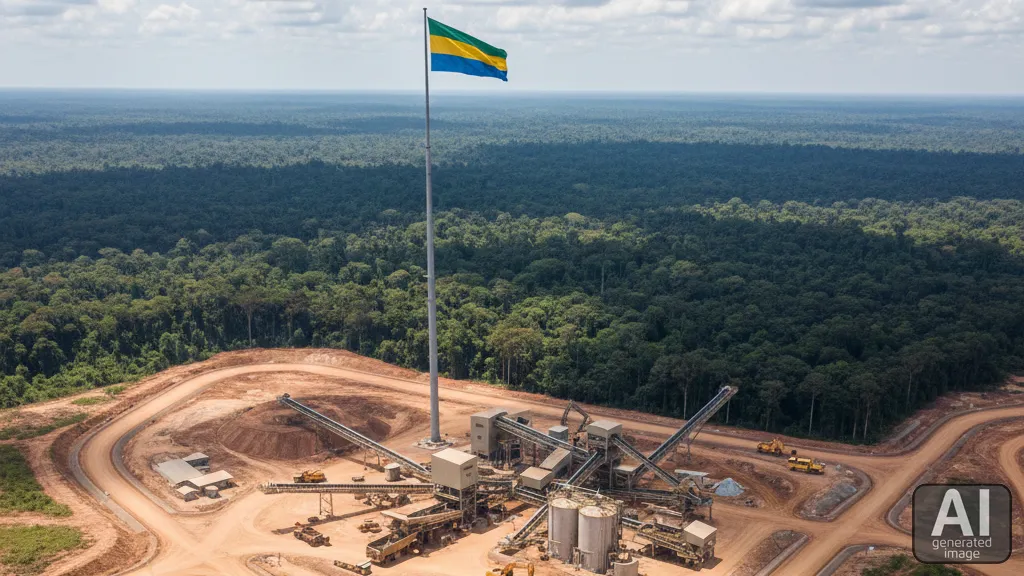
Gabon has launched a sweeping audit of mining contracts as part of IMF-linked reforms, aiming to boost transparency and investor confidence.
Gabon has announced a comprehensive audit of mining contracts as part of a wider governance reform agenda linked to ongoing negotiations with the International Monetary Fund for a new lending program. The initiative, which targets all mining agreements signed between 2010 and 2024, signals a decisive shift toward tighter oversight of a sector that plays a central role in the country’s economic strategy alongside oil.
The audit has been ordered by President Brice Oligui Nguema, who has also mandated the full publication of all mining agreements. Authorities say the goal is to improve transparency, identify contractual weaknesses, and ensure that the state is receiving an equitable share of revenues from its natural resources. This push follows the suspension of a previous $553 million IMF financing facility after the August 2023 coup, making governance reforms a critical condition for restoring access to international financial support.
Mining is regarded as a strategic pillar of Gabon’s diversification efforts, particularly as the government seeks to reduce reliance on hydrocarbons. The country is a major global producer of manganese, with output dominated by Eramet and China’s Industrial and Commercial Mining Company of Huazhou. In addition to established operations, exploration activity is underway by Apollo Minerals Ltd, while a large iron ore project is being developed by Fortescue Ltd in partnership with the Gabonese state. These projects highlight the scale of Gabon’s mineral potential, but also the importance of clear and predictable contractual frameworks.
The contract review forms part of broader discussions with the IMF aimed at restoring macroeconomic stability and strengthening institutions. IMF projections point to economic growth of about 2.6 percent in 2026, with inflation expected to moderate to around 2.5 percent next year, assuming reforms progress and external financing resumes. By auditing contracts and making them public, the government hopes to rebuild investor confidence, demonstrate fiscal discipline, and align the mining sector with international best practices.
Looking ahead, the audit could have significant implications for Gabon’s mining industry and its appeal to foreign investors. While increased transparency and stronger governance may enhance long-term stability, there is also a risk that contract reviews could raise concerns about renegotiation or regulatory uncertainty. For Gabon and other African mineral producers, the challenge will be to balance reform and accountability with the need to attract sustained investment, ensuring that mining contributes meaningfully to economic growth, employment, and public revenues.
Mini-Glossary
- Audit: A systematic review of contracts or accounts to assess compliance, accuracy, and fairness.
- Governance reforms: Changes aimed at improving transparency, accountability, and institutional effectiveness.
- Lending program: Financial support provided by institutions like the IMF, usually tied to policy reforms.
- Macroeconomic stability: A condition of steady growth, controlled inflation, and sustainable public finances.
- Investor confidence: The degree of trust investors have in a country’s policies, institutions, and economic outlook.
Editor: Vural Burç ÇAKIR