
DRC and Rwanda Finalise US Backed Peace Deal, Opening Path for Stability and Mineral Trade
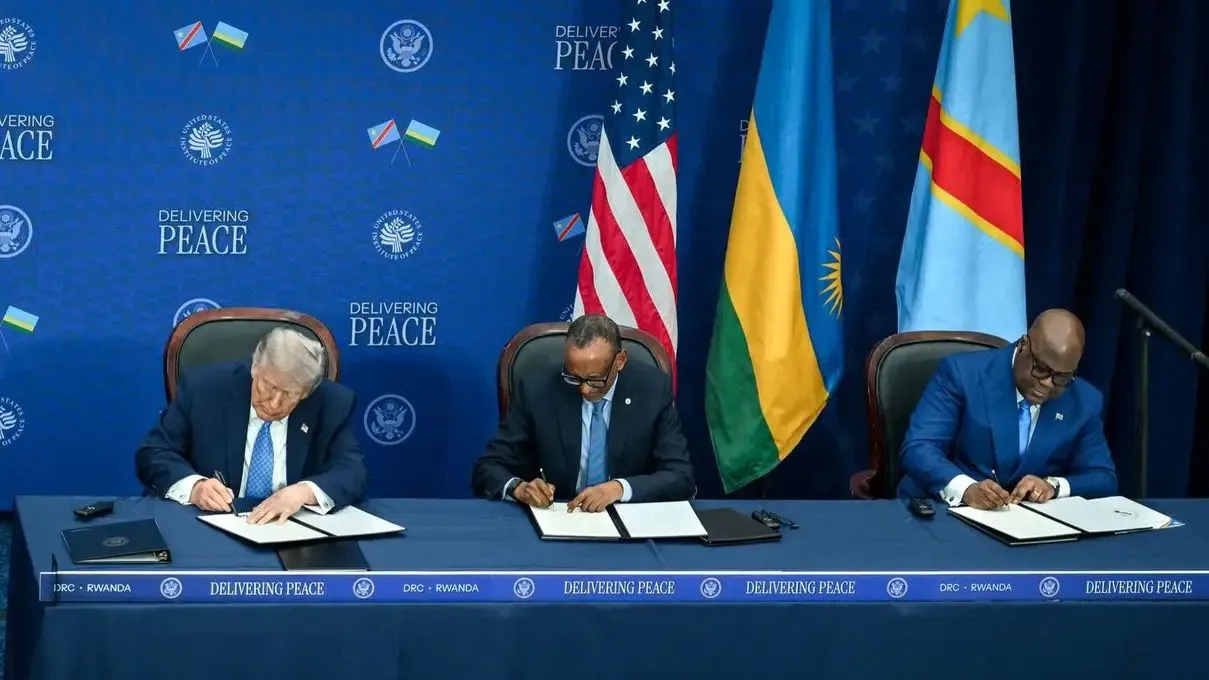
DRC and Rwanda sign a US backed peace deal, pairing conflict de escalation with new mineral trade agreements to support stability and economic cooperation.
A US brokered peace agreement between the Democratic Republic of the Congo and Rwanda marks a potentially transformative moment for Central Africa, offering a diplomatic framework aimed at easing one of the continent’s longest running conflicts while opening new avenues for economic cooperation. Signed in Washington under the auspices of US President Donald Trump, the accord brings together Presidents Felix Tshisekedi and Paul Kagame following months of negotiations that began in Qatar and culminated in a preliminary understanding earlier in June. Although hostilities continue in eastern DRC, the deal provides a renewed platform for de escalation and deeper regional engagement.
Key to the agreement is Rwanda’s commitment to end support for the M23 armed group, a long standing source of tension between the two countries. In parallel, the DRC has pledged to intensify efforts to neutralise Hutu militias, including the Democratic Forces for the Liberation of Rwanda, which have operated in its eastern territories for decades. Both governments also reaffirmed their respect for territorial integrity, an important political signal at a time when front line dynamics remain volatile and the humanitarian toll continues to rise. Despite these commitments, leaders from both sides cautioned that sustained implementation, rather than ceremony, will determine the accord’s success.
The situation on the ground underscores these complexities. Fighting persists in several areas of North Kivu, and M23 has continued to make territorial gains despite previous agreements and a separate deal already signed between the DRC and the group. These conditions highlight the disconnect between diplomatic progress and battlefield realities, and they reinforce the need for long term monitoring, security sector reforms and coordinated regional pressure. Still, the agreement offers a structured pathway toward reducing hostilities and could provide a basis for humanitarian access, civilian protection and local level reconciliation if implemented consistently.
A notable dimension of the pact is the United States’ plan to sign bilateral agreements to purchase rare earth minerals from both Rwanda and the DRC. This economic component signals Washington’s intent to deepen commercial ties while supporting regulated mineral supply chains in a region often overshadowed by conflict linked extraction. US companies are expected to participate in extraction partnerships and long term purchase contracts, creating potential revenue streams for both economies while advancing American interests in securing critical minerals essential for renewable energy technologies, advanced electronics and medical devices. By integrating economic incentives with diplomatic engagement, the US aims to reinforce stability through shared economic benefits.
The implications for Central Africa’s mining landscape are far reaching. If the peace deal gains traction, improved security conditions could unlock new investment opportunities, enhance formalisation of the mineral sector and strengthen cross border trade channels. A more predictable operating environment would benefit not only local producers but also international buyers seeking reliable and ethically sourced materials. However, lasting impact will depend on the durability of the ceasefire commitments, the behaviour of armed groups and the ability of both governments to coordinate security and governance reforms. For Africa’s broader mineral economy, successful implementation could serve as a model for how diplomacy, economic partnerships and resource governance can converge to promote stability and sustainable development.
Mini Glossary
- M23: A rebel group operating in eastern DRC, historically supported by external actors and involved in territorial conflicts.
- Hutu militias / FDLR: Armed groups composed largely of ethnic Hutu combatants, some with roots in post genocide Rwanda.
- Territorial integrity: The principle that a state’s borders should not be violated or altered by external forces.
- Rare earth minerals: A group of metals vital for manufacturing renewable energy systems, electronics and medical technologies.
- Formalisation: The process of bringing informal or artisanal mining activities under regulated, legal and tax compliant frameworks.
Image credit: Official LinkedIn account of Felix A. Tshisekedi Tshilombo, the President of Democratic Republic of the Congo.
Editor: Vural Burç ÇAKIR