
D.R. Congo Set for First Lithium Output as Zijin Advances Manono Project
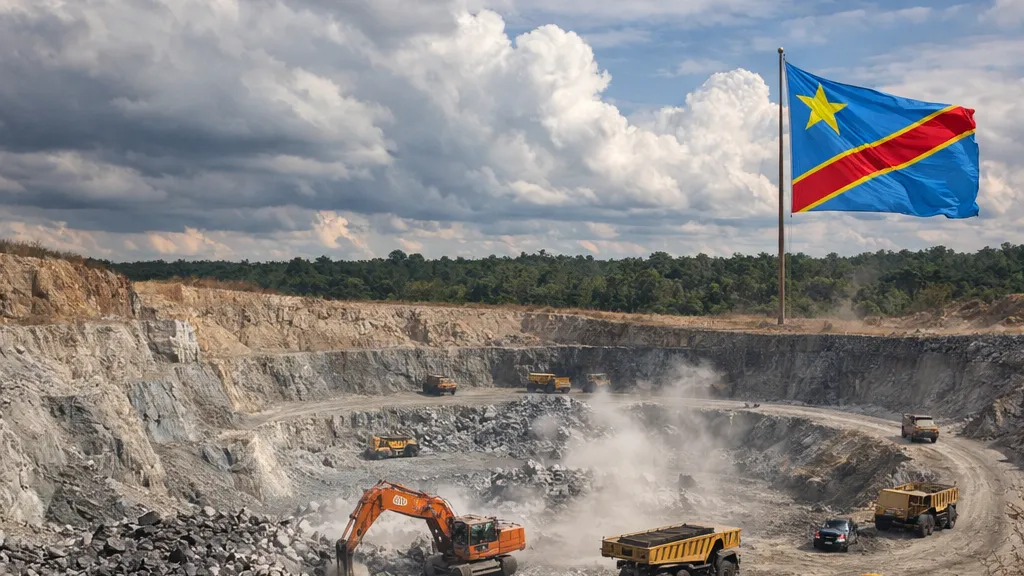
DRC launches first lithium production at Manono as Zijin advances $1bn project, reshaping Africa’s critical minerals landscape.
The Democratic Republic of Congo is poised to enter the global lithium market for the first time as China’s Zijin Mining prepares to commence production at the Manono lithium deposit in June. The accelerated timeline, brought forward from the originally anticipated 2026 start date, represents a defining milestone for the country’s mining sector. With exports scheduled to begin immediately after production starts, the move reinforces China’s broader strategy of securing critical minerals in Africa, even as legal disputes surrounding the project remain unresolved.
The Manono deposit is widely regarded as one of the world’s largest undeveloped hard rock lithium resources, positioning it as a potentially transformative asset in the global battery materials supply chain. The project’s development follows the cancellation of a permit previously held by Australian company AVZ Minerals by the Congolese government. Subsequently, a portion of the site was reassigned to Manono Lithium, a joint venture in which Zijin holds a 61 percent stake alongside state owned miner Cominiere. While arbitration proceedings related to the permit dispute are ongoing, both Zijin and Cominiere maintain that current operations are compliant with Congolese mining legislation.
Although production volumes and first year export targets have not been disclosed, the financial commitment to the project is substantial. Development costs are estimated at approximately 1 billion US dollars, with Zijin funding the investment without capital contribution from Cominiere. Notably, all output from the first phase, including Cominiere’s share, will be marketed and sold by Zijin, underscoring the Chinese firm’s dominant operational and commercial control over the project. At the same time, US backed KoBold Metals holds rights to the opposite side of the deposit but has delayed construction activities pending greater clarity over ownership and regulatory matters.
Power supply arrangements are central to the project’s viability. Cominiere is currently providing 44 megawatts of electricity through Katamba Mining, with plans to expand capacity to 120 megawatts to support both mining operations and surrounding communities. This infrastructure development could have positive spillover effects, improving energy access and potentially stimulating broader economic activity in the region.
The launch of lithium production at Manono comes at a challenging time for global lithium markets, with prices having fallen approximately 86 percent from their late 2022 peak levels. Despite this downturn, the strategic importance of lithium as a key input for electric vehicle batteries and renewable energy storage systems remains intact. By entering lithium production, the Democratic Republic of Congo is diversifying beyond its traditional dominance in cobalt and copper, strengthening its position within the critical minerals value chain. In the medium to long term, successful execution of the Manono project could attract further foreign direct investment, deepen local beneficiation opportunities, and intensify geopolitical competition between China and Western markets for access to Africa’s mineral resources. This development signals a structural shift in the country’s mining landscape, with implications for revenue generation, industrialization prospects, and the strategic alignment of African mineral producers in the evolving global energy transition.
Mini-Glossary
- Hard rock lithium: Lithium extracted from solid mineral deposits, typically spodumene, rather than from brine sources.
- Joint venture: A business arrangement where two or more parties share ownership, risks, and returns of a specific project.
- Arbitration: A legal process where disputes are resolved by an independent tribunal instead of a court.
- Critical minerals: Raw materials considered essential for strategic industries such as renewable energy, defense, and advanced technologies.
- Foreign direct investment, FDI: Investment made by a company or entity from one country into business interests located in another country.
- Beneficiation: The process of adding value to raw minerals through processing before export.
Editor: Vural Burç ÇAKIR