
D.R. Congo Detains Around 300 Chinese Nationals in Illegal Copper Mining Crackdown
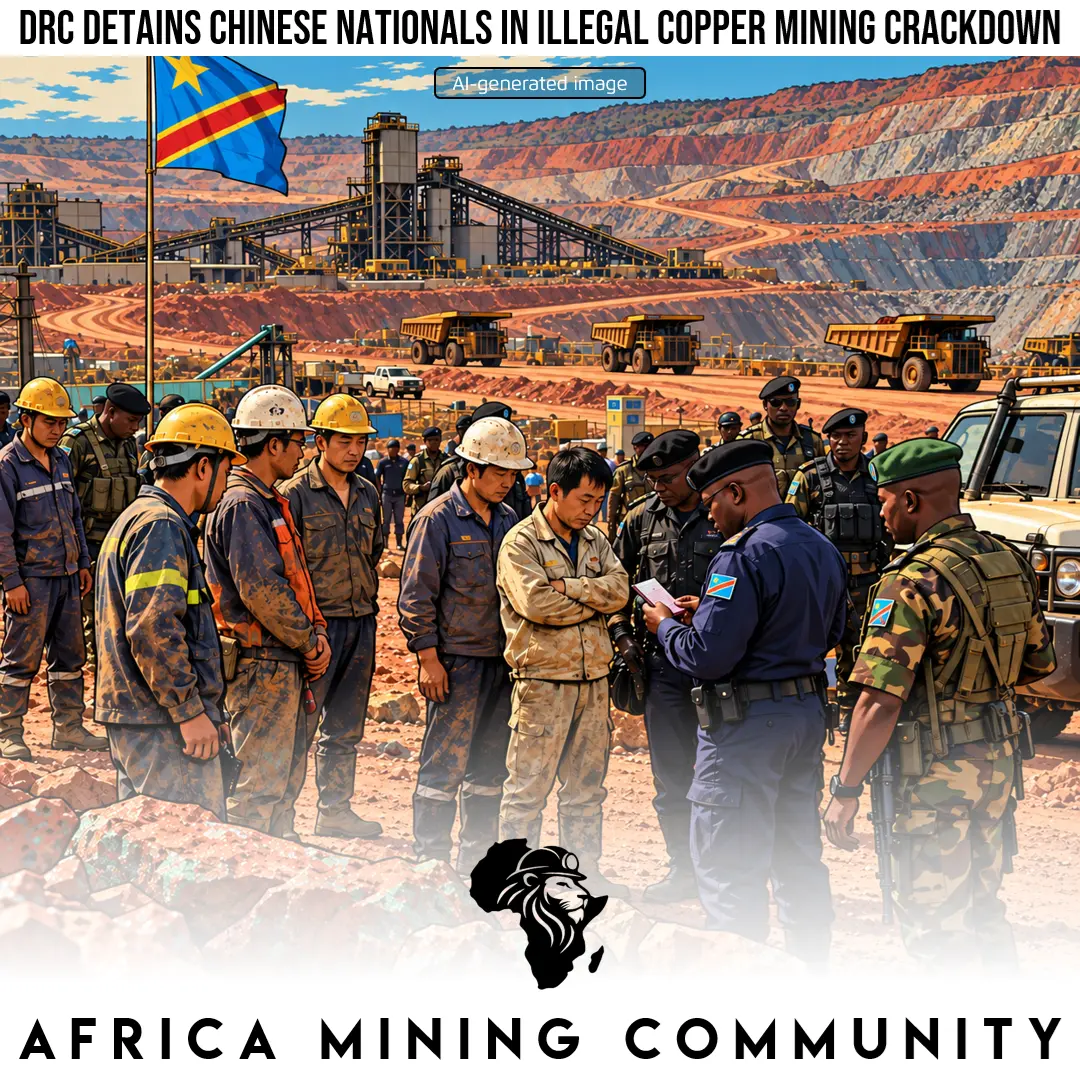
DR Congo detains around 300 Chinese nationals in an illegal copper mining crackdown in Kolwezi, raising concerns over investment and mining regulation.
Authorities in the Democratic Republic of Congo (DRC) have reportedly detained approximately 300 Chinese nationals in a major enforcement operation targeting suspected illegal mining activities across the country's copper-rich mining belt. The crackdown, concentrated primarily in Kolwezi in Lualaba Province, highlights mounting concerns over unauthorized mineral extraction, mining concession violations, and regulatory compliance in one of Africa's most strategically important mining jurisdictions. The detentions come as the DRC strengthens efforts to protect legally allocated mining concessions and restore order in an industry that has experienced rapid expansion, largely driven by Chinese investment.
According to reports published on October 16, 2026, citing people familiar with the situation, the detained Chinese nationals were suspected of participating in mining activities within concessions legally allocated to other companies. The enforcement operation reportedly involved personnel from the DRC's National Security Council and immigration authorities, suggesting a coordinated response involving national security and migration oversight.
Kolwezi, widely recognized as a major center of Congolese copper and cobalt production, hosts substantial mining operations controlled by both international investors and Chinese mining companies. The presence of unauthorized operators within established concession boundaries has become an increasingly contentious issue, raising concerns about mineral theft, operational security, and compliance with the country's mining legislation.
The precise identities of the detained individuals, the companies potentially involved, and the legal consequences of the operation have not been publicly established. Consequently, the allegations remain unproven, and the detentions should not be interpreted as confirmation of criminal wrongdoing.
The Chinese embassy in Kinshasa reportedly intervened following the detentions, resulting in the release of some of the affected workers. However, the total number released, the conditions surrounding their release, and the legal status of those potentially remaining in custody have not been independently confirmed.
At the time of the initial reporting, the Chinese embassy and several Congolese authorities had not publicly responded to requests for comment. This limited official disclosure leaves several questions unanswered regarding the scale of the operation, its legal basis, and possible further enforcement measures.
The reported diplomatic intervention also illustrates the importance of bilateral engagement between Kinshasa and Beijing. China remains one of the DRC's most influential economic partners, particularly in mining, where Chinese enterprises have committed substantial capital to mineral extraction, processing infrastructure, and production expansion.
Over the past decade, the DRC has experienced extraordinary growth in copper production, supported by large-scale foreign direct investment, particularly from Chinese mining groups. Since 2015, the country's copper output has approximately tripled, allowing it to overtake Peru and establish itself as the world's second-largest copper producer after Chile.
This expansion has strengthened the DRC's position in international mineral supply chains, particularly as copper demand is supported by renewable energy infrastructure, electrical transmission networks, electric vehicles, and industrial electrification.
Chinese companies have played a central role in developing the DRC's mineral resources, contributing investment capital, processing capacity, technical expertise, and production infrastructure. Their extensive presence has made China a major participant in the country's copper economy and a significant commercial partner for the Congolese mining sector.
Nevertheless, rapid industrial development has also increased pressure on regulatory institutions responsible for monitoring mining licenses, enforcing concession boundaries, and ensuring that mineral production enters legally recognized commercial channels.
Despite its impressive production growth, the DRC continues to face significant challenges involving unauthorized mineral extraction, informal trading networks, and disputes over access to mineral-rich land. Artisanal and small-scale miners frequently operate in areas designated for industrial mining, sometimes entering concessions without authorization. Such activities can create conflicts between informal miners, concession holders, security personnel, and local communities.
Reports have also suggested that certain unauthorized mining operations have benefited from the involvement or protection of individual soldiers, raising additional concerns about institutional accountability and the enforcement of mining regulations.
Recent incidents demonstrate the persistence of these challenges. In September 2026, Congolese immigration authorities reportedly removed seven Chinese nationals accused of illegally purchasing minerals extracted from concessions allocated to established mining operators in Lualaba Province. Separately, local reporting in October described the detention of more than 20 Chinese nationals in Kolwezi over alleged immigration irregularities and unauthorized mining activities.
These developments point to a broader enforcement challenge involving mineral traceability, concession protection, immigration compliance, and the regulation of informal mining networks. Strengthening institutional coordination and improving oversight mechanisms could help the Congolese government address these concerns while supporting responsible mining activities.
The detention of approximately 300 Chinese nationals could represent an important development in the DRC's efforts to strengthen governance and regulatory enforcement within its expanding copper industry. If implemented transparently and consistently, stronger oversight could help protect legitimate mining investments, reduce unauthorized mineral extraction, improve mineral traceability, and potentially safeguard government revenues from royalties and taxation. However, aggressive or inconsistently applied enforcement measures could also generate uncertainty for foreign operators, complicate diplomatic relations with China, and affect investor confidence in the Congolese mining sector. The broader economic implications will depend on whether authorities pursue clear legal procedures, protect the rights of affected individuals, and establish predictable enforcement standards. Ultimately, the DRC's ability to balance regulatory discipline, responsible artisanal mining, and constructive international investment partnerships will be critical to maintaining its competitiveness as a leading global supplier of copper and other strategic minerals.
Mini-Glossary
- Mining concession: A legally designated area where a company or individual holds authorized mineral exploration or extraction rights.
- Artisanal mining: Small-scale mineral extraction, often conducted using basic equipment and labor-intensive methods.
- Regulatory compliance: Adherence to laws, licensing requirements, and government standards governing business activities.
- Mineral traceability: The ability to track minerals from their extraction sites through processing and commercial supply chains.
- Foreign direct investment (FDI): Investment made by a foreign company or individual into business operations or assets in another country.
- Mineral supply chain: The network of activities involved in extracting, processing, transporting, and distributing mineral commodities.
- Mining governance: The institutional and regulatory framework through which governments oversee mineral resources, mining companies, and industry practices.
DR Congo Mining, DRC Copper Mining, Chinese Mining Companies, Illegal Mining, Kolwezi, Lualaba Province, China Africa Relations, Copper Production, Mining Regulations, Mining Investment, Artisanal Mining, African Mining News, Mineral Resources, Mining Governance, AFMICO