
Copper Intelligence and CoTec Target DRC Copper Tailings
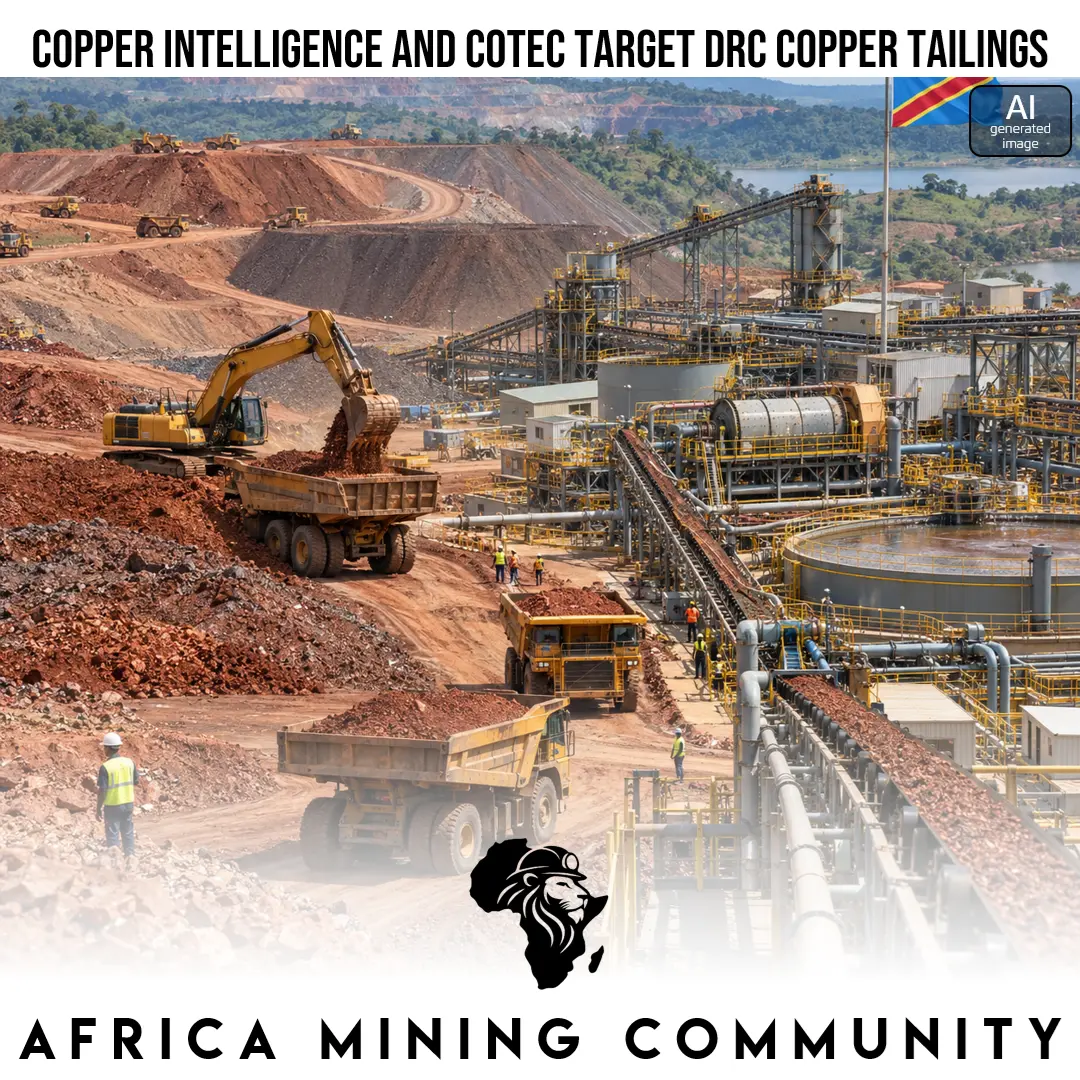
Copper Intelligence and CoTec launch a DRC joint venture targeting historical copper tailings as demand for new strategic metal supply grows.
Copper Intelligence and CoTec Holdings have formalised a joint venture aimed at unlocking value from historical copper tailings in the Democratic Republic of Congo, expanding their exposure to one of the world’s most important copper-producing regions. The partnership will focus on identifying and advancing opportunities to reprocess legacy mine waste across established copper districts, combining Copper Intelligence’s experience in the DRC with CoTec’s mineral-processing and resource-recovery technologies. The companies finalised the definitive joint venture agreement on September 29, 2026.
The initiative will primarily target historical copper tailings and redundant copper deposits, particularly within the Central African Copperbelt. Decades of industrial copper and cobalt mining have left substantial quantities of tailings across the region, including material generated by state-owned mining company Gécamines since the 1950s. These legacy deposits could contain metals that were not economically recoverable using the processing technologies available when the ore was originally mined.
Under the joint venture, CoTec intends to apply its portfolio of processing technologies to improve the economic potential of suitable tailings sites and redundant copper deposits. CoTec’s broader business model focuses on using specialised technologies to extract value from tailings, waste streams, recycled materials and other resources that may previously have been considered marginal or uneconomic. Its portfolio also includes technologies and projects associated with rare earth magnets and other strategic materials.
Copper Intelligence will complement this technological capability with its regional experience and knowledge of copper exploration and development in the DRC. The company is focused on building and advancing copper assets in the country, giving the partnership access to local geological, operational and project-development expertise that could assist in identifying suitable tailings opportunities.
The partners have established an asset-by-asset development framework rather than committing immediately to specific projects. Any opportunity identified by the joint venture will first undergo detailed legal and technical due diligence. Binding agreements will only be concluded following this assessment, while development commitments will require approval from independent members of both the joint venture board and CoTec’s board of directors. This structure provides additional governance safeguards before capital is committed.
Financing could also become an important component of the strategy as projects advance. According to CoTec, the joint venture intends to target potential funding from the U.S. International Development Finance Corporation, alongside other financing sources, once individual projects achieve sufficient scale. Access to development finance could become particularly relevant for projects requiring substantial processing infrastructure, environmental rehabilitation work and supporting logistics.
The joint venture company itself is being incorporated in the British Virgin Islands, with its formation documents expected to be executed following registration. The partnership also includes two third-party investment vehicles associated respectively with CoTec Chief Executive Officer Julian Treger and Chairman Lucio Genovese.
The agreement comes during a period of exceptionally strong copper-market conditions. London Metal Exchange three-month copper reached a record US$14,875 per tonne on September 10, 2026, amid tight concentrate availability, supply concerns and strong strategic demand for the metal. Copper remains critical to electricity grids, renewable-energy systems, electric vehicles, digital infrastructure and data centres, making long-term access to additional supply increasingly important for both producers and consuming economies.
For the DRC and the wider African mining industry, successful redevelopment of historical tailings could demonstrate how existing mining districts can generate additional economic value without relying exclusively on conventional greenfield mine development. Reprocessing legacy material may create opportunities to recover previously discarded copper and other valuable minerals while potentially supporting rehabilitation of historic mine-waste areas. However, the commercial significance of the Copper Intelligence and CoTec initiative will depend on the grade and mineralogy of individual tailings deposits, metallurgical recovery rates, infrastructure requirements, environmental liabilities, permitting conditions and access to competitive financing. If technically and economically viable projects emerge, the approach could extend the productive life of established DRC mining districts and contribute additional metal supply at a time of increasing global demand.
Mini-Glossary
- Tailings: Waste material left after valuable minerals have been separated from mined ore.
- Legacy mine waste: Historical mining material, including tailings and waste rock, accumulated during previous mining operations.
- Central African Copperbelt: A major copper and cobalt producing geological region extending through parts of the DRC and Zambia.
- Due diligence: A detailed technical, legal, financial and commercial assessment conducted before an investment or agreement is finalised.
- Metallurgical recovery: The percentage of a valuable metal that can successfully be extracted from processed material.
- Redundant deposits: Mineral-bearing material or assets that are no longer actively exploited but may become economically attractive through improved technology or market conditions.
- Strategic materials: Minerals and metals considered important for industrial development, advanced technologies, energy systems or national supply-chain security.
- Greenfield mine development: Development of a new mining operation in an area without established mining infrastructure.
- Mineralogy: The study and identification of minerals within rocks, ores or processing residues.
- LME: London Metal Exchange, a major global marketplace for industrial metals including copper.
Editor: Vural Burç ÇAKIR