
Atomic Eagle Unveils Major Exploration Target for Muntanga Uranium Project
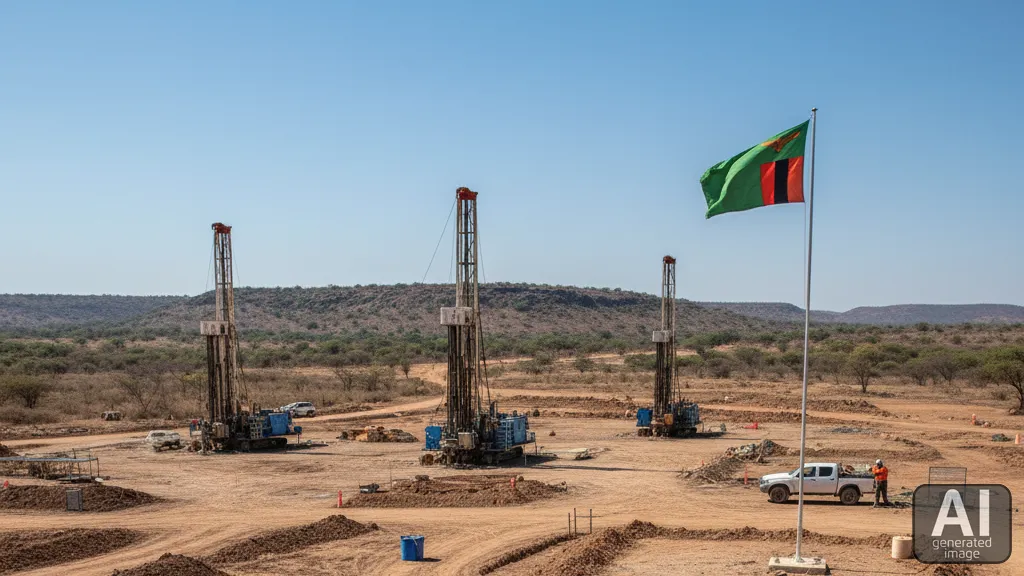
Atomic Eagle unveils a major JORC Exploration Target for the Muntanga Project, highlighting strong uranium growth potential in Zambia’s Karoo basin.
Atomic Eagle Limited has entered a pivotal stage in the evolution of its Muntanga Uranium Project in Zambia with the announcement of a substantial new JORC Exploration Target. This development underscores the company’s commitment to scaling its uranium footprint within the highly prospective Karoo basin, a region increasingly recognised for its strategic contribution to Africa’s uranium resources. Although the target remains conceptual due to limited drilling, it provides an early framework for understanding the upside potential embedded in the broader project area and signals the start of an accelerated growth phase for the company.
The newly defined Exploration Target, estimated between 40.0 and 100.5 million pounds of U₃O₈ at grades ranging from 150 to 350 parts per million, represents a significant potential expansion beyond the current Mineral Resource base. Prepared in accordance with the JORC Code 2012, the target highlights meaningful exploration upside but also reflects the early stage nature of the work, since the existing data does not yet support the classification of a Mineral Resource. Atomic Eagle notes that further drilling could either confirm or fail to confirm these conceptual volumes, which is consistent with the JORC framework for Exploration Targets. Nonetheless, this range offers investors and industry observers a clearer sense of the potential scale that the Muntanga Project could achieve with sustained exploration.
Importantly, the Exploration Target builds upon the existing JORC compliant Mineral Resource, which currently stands at 40 million pounds in the Measured and Indicated categories and 7.4 million pounds classified as Inferred. The company’s strategy prioritises rapid expansion of this resource footprint, leveraging the extensive land package it holds across the Karoo basin. By defining an exploration range of this magnitude, Atomic Eagle is articulating a broader geological opportunity that extends well beyond the known deposits, positioning the Muntanga Project as a potentially significant future supplier of uranium from Southern Africa.
Looking ahead, the company is preparing for the most ambitious exploration program at Muntanga since the discovery of the deposit. Full program details will be released next year, with maiden drilling results expected in early 2026. This upcoming campaign is expected to test the geological models underpinning the Exploration Target and to refine the scale and geometry of mineralised zones across the project area. If successful, the program could materially reshape the project’s development trajectory and strengthen Atomic Eagle’s standing within the regional uranium sector.
The announcement carries notable implications for Africa’s mining landscape, particularly for Zambia’s emerging uranium industry. By signalling the potential to unlock a large scale uranium resource, Atomic Eagle may help attract greater exploration capital into the Karoo basin and reinforce Zambia’s position as a prospective destination for critical minerals investment. Successful advancement of the Muntanga Project could stimulate broader economic activity, support local development and contribute to regional integration into the global clean energy supply chain.
Mini Glossary
- JORC Code 2012: A professional standard used in Australia and internationally for reporting Exploration Targets, Mineral Resources and Ore Reserves.
- Exploration Target: A conceptual estimate of potential mineralisation based on limited data, not sufficient to define a Mineral Resource.
- Mineral Resource categories: Classifications of mineralisation confidence, including Measured, Indicated and Inferred.
- Karoo basin: A large sedimentary basin in Southern Africa known for hosting uranium bearing formations.
- Parts per million (ppm): A unit of measurement used to express low concentrations of minerals in rock.
Editor: Vural Burç ÇAKIR