
Allied Gold Produces First Gold at Ethiopia’s Kurmuk Mine
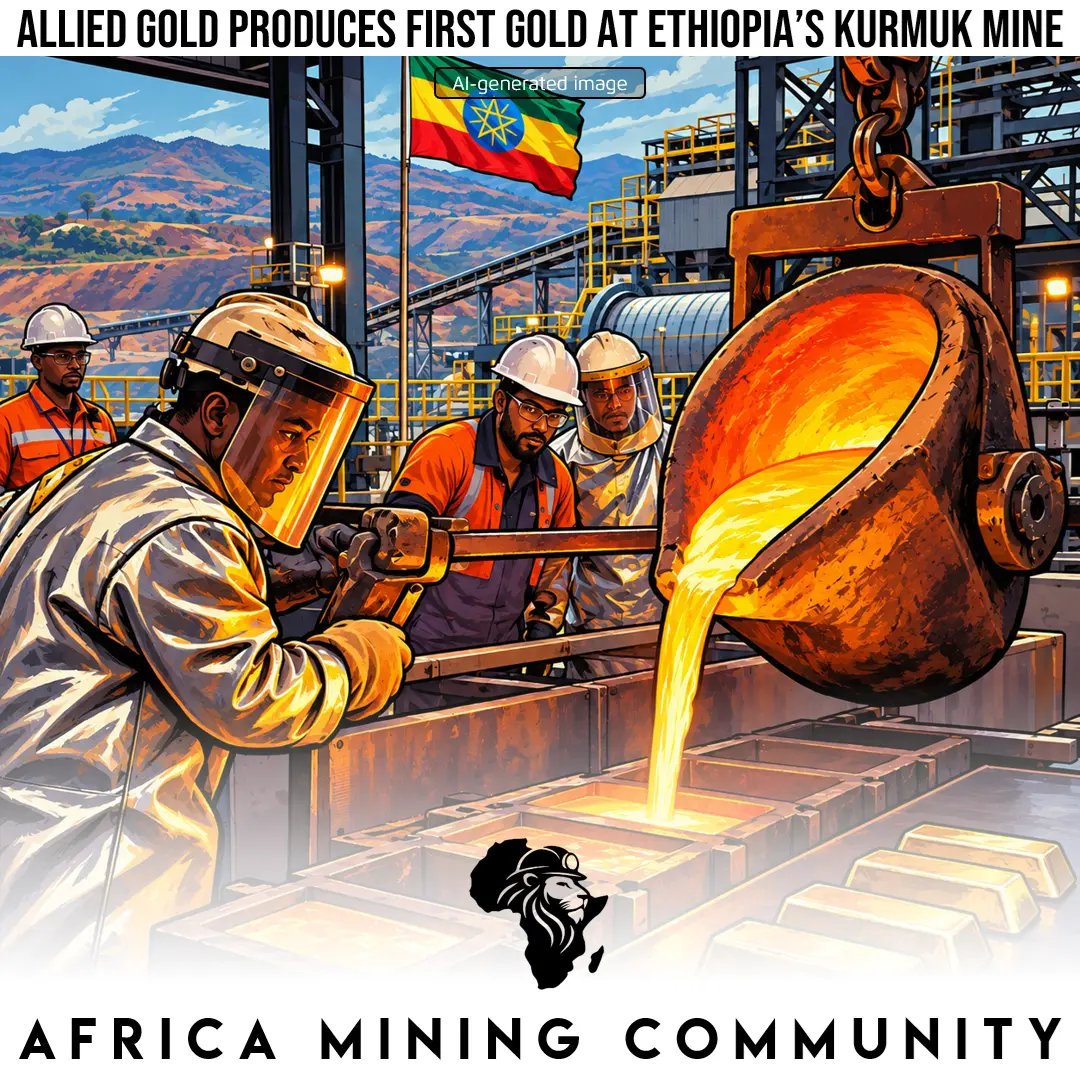
Allied Gold pours first gold at Ethiopia’s Kurmuk mine, targeting 300,000 ounces annually and accelerating its African gold production growth.
Allied Gold Corporation has achieved a significant operational milestone with the successful first gold pour at its Kurmuk mine in Ethiopia, marking the beginning of gold production at the Canadian mining company’s newest African operation. The achievement represents a major step forward in Allied Gold’s growth strategy, as the company continues to expand its production capacity and strengthen its position as a leading gold producer across the African continent. Kurmuk is expected to become one of the company’s principal production assets, contributing substantially to its long-term operational and financial growth.
The Kurmuk mine is expected to produce between 25,000 and 35,000 ounces of gold in 2026, reflecting the initial commissioning and production ramp-up phase. Allied Gold anticipates a significant increase in output in 2027, with annual gold production forecast to reach between 240,000 and 270,000 ounces. Commercial production is scheduled to commence by the end of 2026, while the operation is expected to achieve its full designed processing capacity in early 2027. This gradual increase in production will allow the company to optimize its mining operations, improve processing efficiency and establish consistent operating performance.
By 2028, annual gold production at Kurmuk is projected to reach approximately 300,000 ounces, positioning the operation as a major gold-producing asset within Ethiopia’s developing mining sector. The mine is also expected to average around 300,000 ounces of gold annually during its first four years of operation. These production forecasts underline the strategic importance of Kurmuk within Allied Gold’s portfolio and highlight the project's potential to become a substantial contributor to the company’s consolidated gold production and revenue generation.
To support the transition toward full-scale operations, Allied Gold is completing the remaining power infrastructure and mobilizing its full haulage fleet. The development of reliable power infrastructure is essential for maintaining uninterrupted processing operations, while the deployment of additional mining equipment will improve material transportation between the mine and processing facilities. As commissioning activities progress, the company expects gold recovery rates to improve through operational optimization and the stabilization of its processing circuits. These developments are expected to support higher throughput, enhanced operational efficiency and more consistent gold production.
The first gold pour at Kurmuk also comes following the collapse of a proposed $4 billion acquisition of Allied Gold by China’s Zijin Gold. Despite the termination of the proposed transaction, Zijin Gold retains a 9.2% equity stake in the Canadian mining company, maintaining its financial exposure to Allied Gold’s expanding African asset portfolio. The successful commencement of production at Kurmuk represents an important operational development for Allied Gold as it continues to advance its independent growth strategy and deliver on its production expansion objectives.
Beyond Ethiopia, Allied Gold is advancing the expansion of its Sadiola gold mine in Mali, another key component of the company’s long-term growth plans. The combined contribution of Kurmuk’s production ramp-up and the expansion of Sadiola is expected to support Allied Gold’s strategic target of achieving approximately 800,000 ounces of annual gold production by 2029. By expanding its existing operations and bringing new mining assets into production, the company aims to strengthen its production profile, increase operational scale and enhance its competitiveness within the African gold mining industry.
The commencement of gold production at Kurmuk could have significant implications for Ethiopia’s mining industry and broader economy. As the operation progresses toward commercial production, increased gold output could contribute to higher mineral export revenues, foreign exchange earnings, employment opportunities and government income through mining-related taxes and royalties. The development could also strengthen Ethiopia’s attractiveness as a destination for international mining investment, particularly as the country seeks to expand its industrial-scale mining sector and diversify its export base. On a continental level, Allied Gold’s simultaneous expansion in Ethiopia and Mali reflects the continuing importance of African gold resources in global mining investment strategies. However, the realization of these economic and industrial benefits will depend on successful production ramp-up, infrastructure reliability, operational performance and the prevailing gold market environment.
Mini-Glossary
- First Gold Pour: The initial production of gold from a newly commissioned mining operation, marking an important transition from project development to production.
- Commissioning: The process of testing, adjusting and preparing mining and processing equipment for reliable operation.
- Production Ramp-Up: The gradual increase in production levels as a mine progresses toward its planned operating capacity.
- Commercial Production: The stage at which a mining operation achieves established operating criteria and transitions into regular commercial operations.
- Designed Processing Capacity: The maximum planned volume of ore that a processing facility is engineered to handle within a specified period.
- Haulage Fleet: A collection of mining trucks and associated equipment used to transport ore, waste rock and other materials.
- Gold Recovery Rate: The percentage of gold successfully extracted from processed ore.
- Throughput: The quantity of ore processed by a mining facility over a specific period.
- Equity Stake: A percentage ownership interest in a company, typically represented by shares.
- Consolidated Gold Production: The combined gold production generated by all relevant mining operations within a company's portfolio.