
$300 Million Power Interconnector to Boost DRC Copperbelt Mining Industry
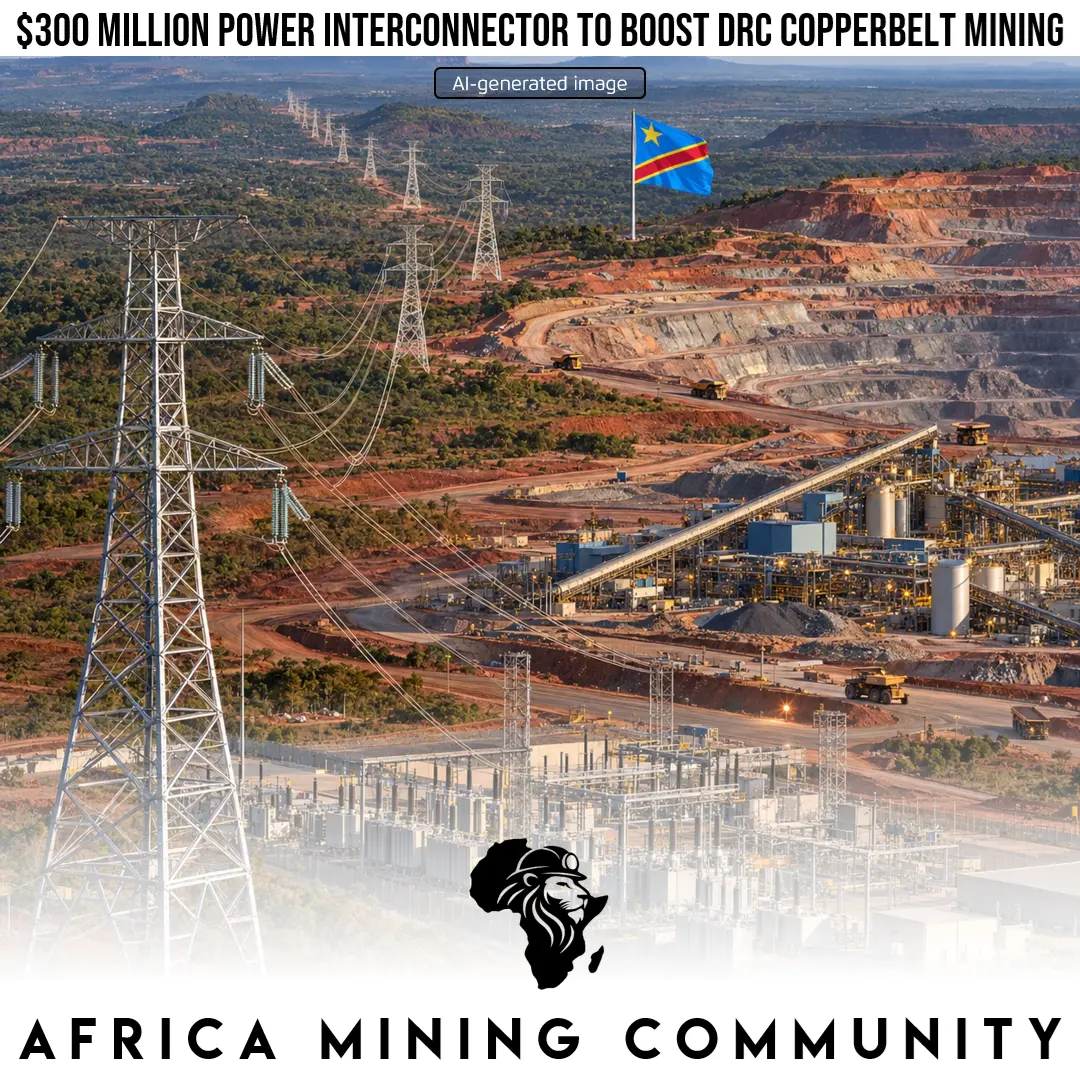
$300 million Zambia-DRC power interconnector aims to supply 550 MW to the DRC Copperbelt, boosting copper, cobalt mining and mineral processing.
The Democratic Republic of the Congo (DRC) is taking a significant step towards addressing its persistent electricity shortages and strengthening its mining industry through a proposed $300 million cross-border power transmission project connecting Zambia and the DRC. On October 6, 2026, the DRC's Strategic Investment Fund (FIS-RDC), Enterprise Power DRC (EnPower), global commodities trader Trafigura, and infrastructure investment company Gridworks Development Partners signed a Strategic Framework Agreement to jointly finance, construct and operate the Kalumbila–Kolwezi Interconnector Project (KKIP). The initiative is expected to improve access to reliable, competitively priced electricity in the DRC's Copperbelt, one of Africa's most strategically important copper and cobalt production regions.
The project involves developing an approximately 200-kilometre high-voltage electricity transmission line linking Kalumbila in northwestern Zambia with Kolwezi in the DRC's Lualaba province. Designed with a transmission capacity of 700 megawatts (MW), the interconnector will enable the DRC to import up to 550 MW of electricity from the Southern African regional power market. Its technical design also provides opportunities for future expansion beyond 1,000 MW, potentially supporting growing industrial electricity demand over the coming decades. The infrastructure will strengthen the DRC's integration into the Southern African Power Pool (SAPP), a regional electricity trading network that connects national power systems and facilitates cross-border energy exchanges.
The development comes at a critical time for the Congolese mining industry, which continues to face substantial electricity supply constraints despite the country's considerable mineral wealth. The DRC's structural power deficit is estimated to exceed 1,000 MW, creating major operational challenges for mining companies, mineral processors and industrial manufacturers. Inadequate electricity availability can disrupt extraction activities, reduce processing efficiency and increase operating costs, particularly when producers must rely on expensive alternative power sources. By introducing an additional supply route from Zambia and the wider Southern African electricity market, KKIP is intended to reduce these constraints and improve the operational reliability of industrial facilities across the Copperbelt.
One of the project's most important potential benefits is its ability to unlock mining and mineral refining investments that have been delayed or constrained by insufficient electricity supplies. Copper and cobalt production requires substantial amounts of energy, particularly during mineral concentration, smelting, refining and other downstream processing operations. A more dependable supply of competitively priced electricity could encourage mining companies to expand existing operations, accelerate new developments and invest in additional processing infrastructure. Such improvements would also support the DRC's efforts to capture greater economic value from its mineral resources by expanding domestic beneficiation and mineral processing activities rather than relying exclusively on the export of less-processed materials.
The project has attracted a consortium of public and private investors with complementary financial and technical capabilities. Gridworks will act as the lead equity investor and majority shareholder, providing infrastructure investment expertise and supporting the project's long-term development. The company is owned and funded by British International Investment (BII), the United Kingdom's development finance institution. Meanwhile, Trafigura has agreed to arrange a significant portion of the project's debt financing, drawing on its experience in commodity markets, energy infrastructure and international trade finance. FIS-RDC and EnPower have also confirmed their intention to participate through equity investments, while discussions are underway regarding potential participation by Zambian entities. EnPower, a licensed Congolese electricity trader and member of SAPP, is serving as the project developer.
According to the project partners, KKIP has secured the necessary concessions, licences and regulatory authorisations and has entered the final stage of development. Although the agreement represents a significant milestone, the infrastructure remains a proposed investment rather than an operational transmission system. The partners must still complete the remaining development and financing arrangements before construction and electricity deliveries can begin. Once implemented, the project is expected to become Africa's first privately developed and financed cross-border electricity transmission infrastructure project, potentially demonstrating a new investment model for regional power infrastructure.
Beyond its direct contribution to the mining sector, the interconnector could deliver broader economic benefits to both the DRC and Zambia. For Zambia, the new transmission route would provide licensed electricity producers with additional opportunities to export power to industrial customers in the neighbouring DRC. This could stimulate investment in electricity generation capacity and strengthen regional energy trading. For the DRC, improved electricity availability could encourage the development of small and medium-sized enterprises, support industrial diversification and create employment opportunities in mining-related services, manufacturing, logistics and other economic activities.
The initiative is also intended to support electricity access for communities and businesses surrounding the mining corridor. Although mining operations are expected to anchor demand for the transmission infrastructure, the project partners have indicated that capacity could also serve the wider population. Achieving these benefits would depend on the development of appropriate distribution connections, commercial arrangements and local electricity supply infrastructure. Nevertheless, the project illustrates how large-scale mining energy investments can potentially contribute to wider socioeconomic development when integrated with national electrification and industrialisation strategies.
The agreement carries additional significance for the DRC's infrastructure financing landscape, representing the first publicly announced investment initiative by FIS-RDC since its establishment in October 2025. The fund was created to mobilise investment into strategic projects capable of supporting long-term economic development. Its participation alongside international investors and private-sector energy companies highlights the growing importance of public-private investment structures in financing capital-intensive infrastructure across Africa. Such arrangements can help governments attract institutional capital, distribute project risks and accelerate the development of infrastructure that may otherwise face substantial public funding constraints.
From a broader industry perspective, the Kalumbila–Kolwezi Interconnector Project could strengthen the DRC's position within global copper and cobalt supply chains by addressing one of the principal constraints on mining expansion: dependable access to affordable electricity. Greater power availability could improve production efficiency, support investment in domestic mineral refining and increase the country's potential to generate export revenues, employment and fiscal contributions. Zambia could simultaneously benefit from expanded electricity export opportunities and greater regional energy market integration. However, the scale of these benefits will depend on successful project financing, timely construction, the availability and cost of electricity for export, and the extent to which additional power reaches industrial users and surrounding communities. If these conditions are achieved, KKIP could become an important example of how regional power infrastructure can support mining competitiveness, industrialisation and economic growth across Southern Africa.
Mini-Glossary
- Power Interconnector: A high-voltage transmission line connecting electricity networks, allowing power to be transferred between regions or countries.
- Megawatt (MW): A unit measuring electrical power, equivalent to one million watts.
- Southern African Power Pool (SAPP): A regional electricity cooperation and trading system connecting power networks across Southern Africa.
- Structural Power Deficit: A persistent shortage of electricity supply relative to demand.
- Equity Investment: Capital invested in a business or project in exchange for an ownership stake.
- Debt Financing: Funding provided through loans or other borrowing arrangements that must be repaid under agreed conditions.
- Beneficiation: The process of improving the commercial value of minerals through treatment, concentration or processing.
- Downstream Processing: Industrial activities that transform extracted minerals into refined metals or higher-value products.
- Public-Private Partnership (PPP): A collaborative arrangement between government institutions and private companies to finance, develop or operate infrastructure and services.
- Baseload Power: Electricity that can be supplied consistently to meet ongoing energy demand.
- Fiscal Contributions: Government revenues generated through taxes, royalties and other payments associated with economic activities.